Get Full Government Meeting Transcripts, Videos, & Alerts Forever!
Get email alerts on the School Budget Override topic
No spam. Unsubscribe anytime.
Finance committee recommends sending Dennis‑Yarmouth override to town meeting after review of transportation, special‑education costs
Summary
The Town of Yarmouth Finance Committee voted to recommend Article 8 — a Dennis‑Yarmouth Regional School District override — after hearing district officials outline transportation deficits, rising special‑education costs, and accounting timing issues tied to END and circuit‑breaker reimbursements.
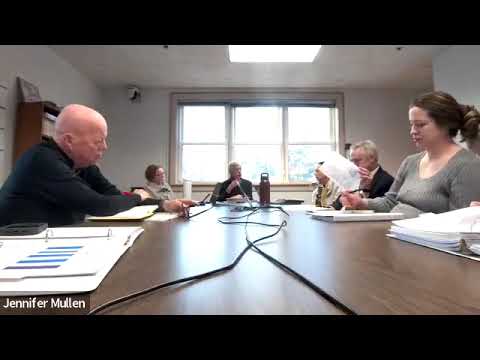
On March 18, 2026, the Town of Yarmouth Finance Committee voted to recommend Article 8, the Dennis‑Yarmouth Regional School District budget override, sending the question to the town meeting for a public vote.
The committee heard a detailed presentation from district officials including Dr. Smith and Dr. Gillson of the Dennis‑Yarmouth Regional School District, who framed the request around rising operating costs for transportation and special education. Dr. Gillson told the committee that while some general‑education transportation lines appear to be in surplus, “when you run all of our transportation costs, we are currently running a transportation deficit,” and that McKinney‑Vento and out‑of‑district tuition pressures can wipe out apparent savings. The district said McKinney‑Vento transportation was running at roughly a $700,000 shortfall and that special‑education tuition and transport together are a major and unpredictable cost driver.
Committee members and the town accountant pressed for clarity on several technical points: how the district treats circuit‑breaker reimbursements, how END (excess and deficiency) timing and state reimbursements affect certified free cash, and whether recent staff turnover in the district business office had introduced accounting inconsistencies. Jennifer, the town accountant, said municipal and school reports differ in detail and urged the committee to allow limited line‑item flexibility while the district stabilizes business management functions. Dr. Gillson noted the district had already completed significant clean‑up work and is tracking capital reimbursements such as town‑specific projects (for example, Ezra Baker) to ensure funds are returned to capital accounts rather than the general fund.
The chair summarized the effect of the override in the committee’s terms as a roughly “1.481” override figure — discussed in the meeting as equivalent to about $0.13 per $1,000 of assessed value — and put a motion to recommend the article. Mr. Anderson moved to recommend; Mr. Perkins seconded. After additional discussion about regional comparators and the limits of local control over special‑education costs (Dr. Smith said the override pressure was driven in part by a select board policy on assessment increases), the committee voted to recommend sending the override article to town meeting.
The committee did not adopt detailed amendments to the district’s budget during the session; the recommendation directs the question to the town floor and leaves final voter approval to town meeting. The article will appear on the warrant and be decided by the town meeting electorate.