Get Full Government Meeting Transcripts, Videos, & Alerts Forever!
Get email alerts on the Water Transport topic
No spam. Unsubscribe anytime.
Fort Myers Beach advisory committee outlines guard rails for possible water taxi and ferry service
Summary
The Marine and Environmental Resource Task Force agreed members will draft prioritized ‘needs’ and ‘wants’ for a potential water taxi/ferry to protect Fort Myers Beach’s back bay habitat while assessing operational models, licensing, and infrastructure constraints ahead of a May 13 joint meeting with the Anchorage Advisory Committee.
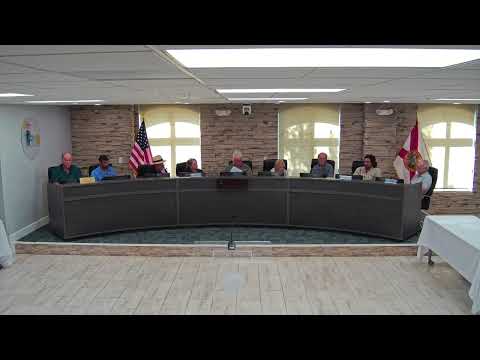
The Marine and Environmental Resource Task Force (MURF) spent the bulk of its March 11 meeting weighing how a proposed water taxi or ferry could operate without harming the back bay’s seagrass, oyster beds and wildlife.
Chair (speaking to open the discussion) said the committee’s charge from town staff is to “come up with some guard rails and recommendations for the town council regarding a water taxi, water ferry service,” emphasizing the group’s “dual mission” to protect the environment while providing useful transportation for residents, seasonal visitors and tourists.
Members debated two broad models: a scheduled ferry with fixed stops akin to Fort Myers Beach’s open‑air trolley, or an on‑demand, app‑driven taxi model. Jennifer Rusk said a scheduled service with set stops — for example Bowage Park, a dock at Time Square, the Moundhouse and a Little San Carlos stop — would be more logistically reliable, while others noted private captains already sometimes provide ad‑hoc rides.
Committee member Robert How urged strict safety and environmental controls, arguing that operators should not be paid per trip because “then we run into them going faster,” and endorsing prop guards to protect seagrass and marine life. Several members agreed speed control and compliance with slow‑wake zones must be central to any guidelines.
The panel discussed how local permitting would interact with federal and state maritime rules. Members noted Coast Guard inspections and Fish & Wildlife (FWC) rules cover vessel safety and crewing; the committee proposed town permits be written to require Coast Guard compliance and allow the town to revoke local permission for repeat violations — mirroring permit enforcement used for parasailing and other beach vendors.
Practical constraints surfaced repeatedly: parking at terminals, shallow channel drafts that limit larger vessels, seasonal passenger volumes that may not support 20–30‑passenger boats, and the cost of staff and maintenance for any commercial operator. Several members said these constraints make a large, year‑round commercial operation unlikely, but the committee agreed it should still prepare guidance in case a well‑funded seasonal operator or entrepreneurial app model emerges.
Next steps: the committee voted that each member will return to the April meeting with two “needs” and two “wants” for both ferry and taxi categories; MURF will consolidate the list before the May 13 joint meeting with the Anchorage Advisory Committee. Town staff confirmed May 13 has been reserved for that joint session.
The committee did not take a formal vote to recommend a specific operational model; it framed its work as preparatory guidance for town staff and council rather than an endorsement of a particular operator or service. The next MURF meeting is scheduled for April 8 at 10 a.m., and the joint session with Anchorage Advisory Committee is set for May 13.