Get Full Government Meeting Transcripts, Videos, & Alerts Forever!
Get email alerts on the Energy Policy topic
No spam. Unsubscribe anytime.
House passes broad utility relief and energy bill after marathon debate
Summary
After hours of questioning and amendments, delegates adopted the conference committee report on a sweeping utility relief and energy package that reduces near‑term household energy surcharges and directs funds to auctions and clean‑energy programs; the bill passed with a roll‑call vote.
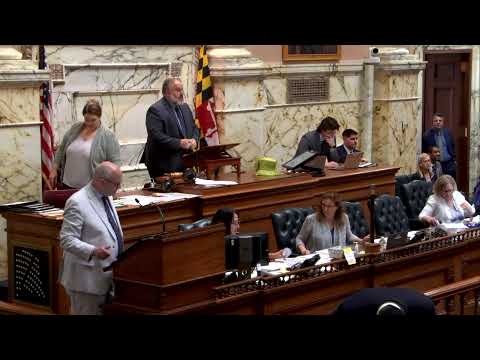
The House adopted a comprehensive energy and utility package on March 29, 2026, after lengthy floor debate over its costs, timelines and policy tradeoffs. The conference committee report on House Bill 1532—titled in debate a multifaceted "utility relief" act—received final passage on a roll‑call vote after an extended floor exchange about program design, near‑term relief and long‑term energy policy.
Sponsor remarks: The chair of the Environment and Transportation Committee described the bill as an effort to address both near‑term relief and medium‑/long‑term supply and market issues. Key provisions discussed on the floor include a temporary reduction in the Empower Maryland surcharge for electric ratepayers (electric program goal reduced for a three‑year cycle), removal of gas in that program, authorization of reverse auctions funded from the Strategic Energy Investment (SEIF) fund to support renewable generation and storage projects, a prohibition on utilities charging ratepayers for the cost of joining certain regional transmission organizations, adjustments to large‑load tariff thresholds and a data‑center registry and voluntary clean capacity rating for data center operators that bring incremental, non‑emitting generation to serve load.
Opposition and concerns: Critics argued the bill does not produce sufficient immediate relief for households facing sharply higher electricity bills and that it retains policies that raise long‑term costs by emphasizing certain renewable policies over near‑term supply increases. Several members warned the bill does not address immediate base‑load shortages and criticized potential long‑term cross‑subsidies. Proponents countered that the legislation contains both near‑term measures (surcharge changes and SEIF allocations for auctions) and actions to increase in‑state generation and transmission planning that will benefit ratepayers over time. The chair called the measure “comprehensive” and said it would provide near‑term and structural changes to the state’s energy posture.
Final action: Following debate, the House adopted the conference committee report and passed the bill. The transcript records the final roll‑call as recorded on the session with the bill declared passed. The bill includes multiple appropriations and authorizations that intersect with the governor’s budget and requires follow‑up regulation and procurement by state agencies.
Why it matters: The package touches utility billing mechanics, state‑funded auctions for renewables and storage, net energy metering transition provisions, and changes to how large energy customers are handled. It was the session’s most discussed policy item on energy and drew detailed questioning on program effects, fiscal mechanics and regulatory implementation.
Speakers in this article are attributed to labels used on the House floor transcript.