Get Full Government Meeting Transcripts, Videos, & Alerts Forever!
Get email alerts on the Biotech Policy topic
No spam. Unsubscribe anytime.
Lawmakers press plan to convert biotech investor tax credit into $10M annual grant program
Summary
Delegates questioned a proposal to change Maryland’s biotechnology investment tax credit into a $10 million-a-year grant program for investors in early-stage biotech—critics said the shift hands public dollars to private investors; sponsors said safeguards and economic returns justify the change.
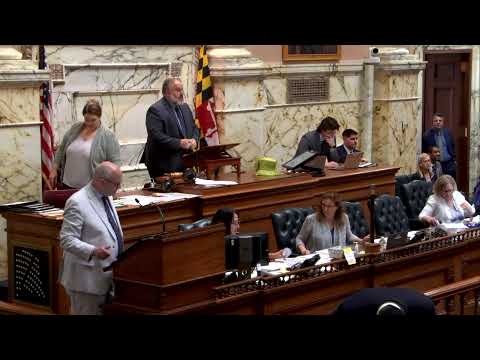
Members of the House spent substantial floor time on a rewrite of a biotechnology incentive program, debating committee amendments that would convert an existing investor tax credit into a grant program paid from the state budget. The bill’s floor exchanges focused on whether grant payments represent an appropriate use of taxpayer funds and whether the program’s safeguards are sufficient to protect the public interest.
A floor leader summarized the change under debate as a conversion of an investor tax credit into a grant program for early‑stage Maryland biotech companies and their investors. “The governor shall include in the annual budget an appropriation of $10 million a year of taxpayer money to private companies,” the exchange on the floor recorded, a point opponents seized on as an example of direct state subsidy to private investors. Sponsors said they expected the program to leverage private investment and create high-value jobs; critics warned that grants differ from tax credits because they are immediate, taxable transfers that may benefit wealthy investors and increase the state’s direct outlays.
The conference and committee exchanges added new reporting and recapture language, and sponsors said safeguards remain in the bill to limit misuse (for instance, clawback provisions if firms leave the state). Members probed the program’s eligibility thresholds, the minimum investor commitment, historical return on TEDCO investments and how the proposal compares with other states’ programs. After debate, committee amendments were adopted and the favorable report passed to third reading.
What happens next: the bill, as amended on the floor, will be taken up on third reading for final passage. Floor debate indicated the measure is controversial: supporters framed the program as targeted and job‑creating; critics said it would funnel public funds to private investors with limited transparency.
Speakers quoted are attributed to their labels as recorded in the transcript.