Get Full Government Meeting Transcripts, Videos, & Alerts Forever!
Get email alerts on the Housing topic
No spam. Unsubscribe anytime.
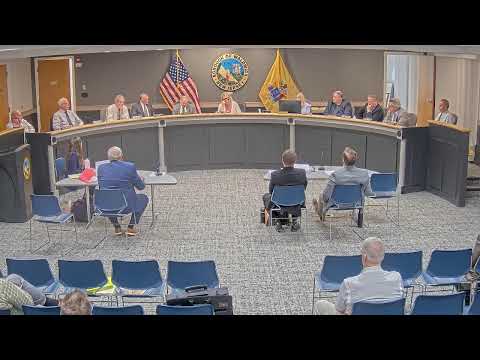
Waldwick planning board forwards updated housing element and fair-share plan to borough council
Summary
The Waldwick Planning Board voted to forward the borough's updated housing element and fourth-round fair-share plan to the borough council for adoption, citing statutory deadlines and a post-adoption challenge window; the planner summarized rehabilitation and prospective-unit obligations and existing credit projects.
The Waldwick Planning Board voted on June 25 to forward the borough's updated housing element and fourth-round fair-share plan to the borough council for final action, a step officials said is needed to meet a June 30 statutory deadline and to obtain potential protection from builder challenges.
Planner Paul Dragel, introduced by the chair, told the board the plan documents the borough's history, demographics and a strategy to meet state-set affordable-housing obligations. "Tonight's review and public hearing on the borough's updated uh housing elements and fair share plan will help us satisfy our fourth round affordable housing obligations," Dragel said, describing the process municipal officials must follow before sending the draft to the council for adoption.
Dragel said the borough's rehabilitation obligation is set at 19 units to be addressed over the next 10 years. He explained the larger prospective need was originally set by the state at 178 units and that technical reviews and adjustments produced lower feasible figures in the consultant's analysis (figures cited in testimony included 147 and 164 in different calculation steps). He also described the vacant-land adjustment, which reduced near-term development potential to about five units under the borough's RP (realistic development potential) calculation.
The planner outlined existing credits and bonuses that reduce the outstanding obligation. "Since that 2018 plan was adopted 36 credits have been created in the borough," Dragel said, listing past projects that generated credits and noting an anticipated Harrison Avenue redevelopment project would provide additional credits because of its location.
Board members asked for and received clarifications about how the Department of Community Affairs calculates obligations (factors include income, non-residential valuation and land availability) and about the now-defunct regional contribution agreement mechanism for transferring credits. Dragel also warned the board that adopted plans have a post-adoption challenge window during which interested parties may object; if the plan survives review and settlement, he said, the borough can gain a period of immunity from some types of builder suits.
After public comment (a resident asked about how project-specific credits relate to the plan) the board took a roll-call motion to forward the draft to the borough council. The motion carried on the board's recorded vote and the plan will be on the council agenda the following evening.
What happens next: the council is expected to consider the resolution at its upcoming meeting; if adopted and submitted to state review, the plan may be subject to a formal challenge period before final determinations and any immunity period take effect.