Get Full Government Meeting Transcripts, Videos, & Alerts Forever!
Get email alerts on the Syringe Service Programs topic
No spam. Unsubscribe anytime.
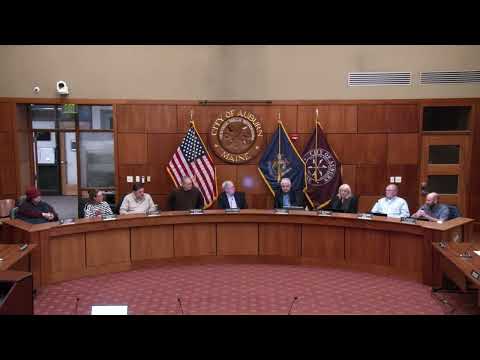
Auburn council debates how to regulate syringe service programs, stops short of ban
Summary
Councilors spent most of a work session weighing whether and how to regulate syringe service programs (SSPs). The council signaled it will not impose a prohibition, asked staff to draft regulations (certification, zoning setbacks, operating hours and caps), and requested map-based buffers and legal guidance before a formal ordinance.
Auburn’s City Council spent the bulk of a work session debating whether to prohibit or regulate syringe service programs, with members expressing sharply different views on public-safety risks and public-health benefits.
A staff moderator opened the discussion by noting state law authorizes SSPs, the legislature expanded authorization to include mobile services, and that CDC rulemaking is pending: “the purpose of our work session is to discuss whether a regulatory ordinance is needed and if so the policy areas that would be included,” the moderator said. The speaker also warned the council’s temporary moratorium on new SSPs is set to expire and an extension item will be placed on the next meeting agenda.
Councillors asked whether a local prohibition was legally viable and about funding. Anne Sites, director of the infectious disease prevention program at Maine CDC, told the council certified SSPs can access state and federal funds for testing and operations but that funding follows certified providers: “Some dollars will be used to purchase syringes and other supplies that are handed out as part of their service,” she said. Several councilors said they opposed an outright ban, preferring to establish local guardrails and zoning limits to reduce perceived community risk.
Local SSP operators and outreach staff described how services connect people to treatment and social supports. Ernestine Peralt, community outreach program supervisor at Spurwink, said her site evolved from limited hours to a 40-hour-per-week clinic as funding and staffing allowed and that outreach teams vary hours to meet need: “We never really turned anybody away … we would still accommodate them,” she said.
Key policy questions the council asked staff to address before drafting an ordinance included: whether only state-certified entities should operate in Auburn (council favored certification as a baseline), which zoning districts should allow brick-and-mortar and fixed sites, how mobile services should be handled, minimum age (staff cited 18 years for SSP participation), separation distances from schools/childcare/churches, hours of operation, reporting requirements and possible application or license fees to cover municipal inspection or cleanup costs.
Councilors debated limits on the number of providers. Several members supported a small initial cap (two or three) to manage applications and oversight; others preferred no cap initially but acknowledged an ordinance can be amended later. Staff said certification requires a brick-and-mortar presence and that certified providers list planned operations at the time of state certification.
The council asked staff to prepare map-based buffer scenarios (for example, 500 ft and 1,000 ft setbacks), a zoning overlay showing residential and commercial areas, and options for hours, reporting and fees. Members also requested legal analysis on risks and preemption before any prohibition or stricter local limitation is pursued. The work session will continue at a later date to refine ordinance language and consider the CDC rules and public feedback.
Next steps: staff will supply zoning and buffer maps, draft possible ordinance language based on the council’s policy preferences, and return with legal guidance on preemption and the moratorium-extension timeline. Public comments and prior workshop testimony will be incorporated into the draft ordinance process.