Get Full Government Meeting Transcripts, Videos, & Alerts Forever!
Get email alerts on the Infrastructure Funding topic
No spam. Unsubscribe anytime.
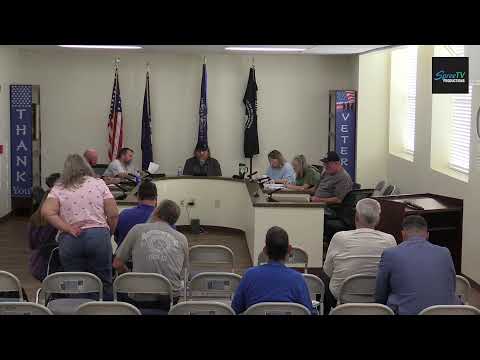
Residents press Morgan County water board for clearer timeline and funding plan for Phase 2 line extensions
Summary
At a Morgan County Water District meeting residents and board members pressed staff on when Phase 2 of long‑planned line extensions will move forward, which agencies will provide funding and what technical steps are required. Staff said Phase 1 must finish before active Phase 2 funding is pursued and outlined required engineering, easements and grant paths.
Rick Martin, introduced during the public‑comment period, pressed the Morgan County Water District board for specifics about Phase 2 of a multi‑phase water‑line extension, asking who ranks projects, how funding is secured and why the work has stalled after years of planning.
“This is a 20‑plus year problem,” Martin said, asking whether the district files projects directly or routes them through Gateway Area Development and what steps are required before state regulators sign off. A district agency official said the board presents projects to Gateway, which then works with engineering firms and funding agencies such as the Kentucky Infrastructure Authority, USDA Rural Development and the Appalachian Regional Commission to obtain money. The official said the board cannot take a project to the Kentucky Public Service Commission until funding is secured.
The agency official listed the typical prerequisites for a funding application: updated engineering and cost estimates, accurate linear‑foot measurements, hydraulic studies, archaeological surveys where required, and easements or right‑of‑way agreements. “They’ll get with our engineering firm and they’ll update the cost list,” the official said, adding that Gateway often defers payment for engineering until after a project is approved and that earlier cost figures can be reworked once Phase 1 is complete.
Martin pointed to a $3.5 million figure on older plans; staff said that number came from previous management’s plans and that an update could substantially change the estimate. The district reported that Phase 1 is expected to be complete in December 2026; staff emphasized that active work on Phase 2 typically does not begin until Phase 1 is underway or finished.
Residents at the meeting described persistent low‑pressure conditions on roads such as Haney Branch and Bethel Chapel, and asked whether the district could place pump stations or allow short‑term customer surcharges to cover gaps. The board and staff repeatedly answered that the PSC sets tariffs and that the district cannot unilaterally impose temporary surge charges on customers; technical fixes such as pump stations or inline booster pumps require engineering and funding. One resident said he was willing to pay upfront to install a meter but not to bear the cost of multiple booster pumps or a community pump station alone.
The meeting also revisited recent grant aid and past debts. Speakers said the district received a $500,000 grant in 2025 to address unpaid bills from previous management and discussed the possibility of another $500,000 earmarked for system improvements in 2027. The transcript contains differing figures about total past unpaid bills — one speaker referenced $587,000 in unpaid bills, while another later stated outstanding debt had been reduced and called it "170‑something thousand" — and staff said some portions of those funds were restricted for particular purposes.
Board members and residents agreed on next steps that are now procedural rather than policy: finish Phase 1 on schedule, have Gateway and the district update engineering cost estimates, pursue grant applications with Gateway’s assistance, and convene follow‑up meetings that include Gateway grant staff and engineers to produce a concrete plan for which roads can be packaged and funded next.
The board did not commit to a specific Phase 2 start date at the meeting. The agency official said Gateway is the entity that will confirm ranking and readiness for funding and that the district and Gateway will reconvene after updated engineering and cost work are completed.