Get Full Government Meeting Transcripts, Videos, & Alerts Forever!
Get email alerts on the District Finance topic
No spam. Unsubscribe anytime.
Board hears business report, approves 1% health premium increase and a three‑year wellness plan
Summary
The board heard a business report on FY26 state receivables and capital balances, noted upcoming bond payments, voted to increase health insurance premiums by 1% for 2026–27 and approved a three‑year wellness program with Memorial Health (initial cost $97,750/year; $302,134 total).
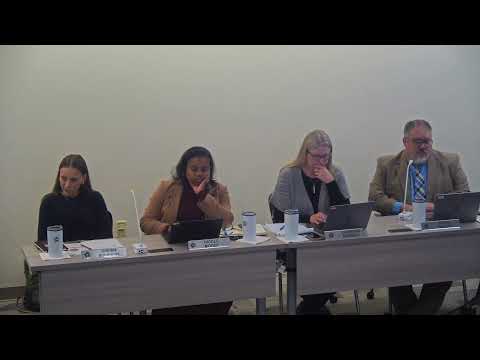
At the April 7 board meeting, Mr. Miller presented the district's business report and benefit recommendations.
Miller said outstanding state payments for FY26 totaled $2,638,771.12 as of March 30, 2026, with line‑item breakdowns that include roughly $909,859 for special projects and $1,678,996 for transportation. He reported the capital projects fund had a beginning investment balance of $54,083,889.18 and an ending balance of $53,603,481.59 for the month of February; sales tax receipts of $1.4 million (January) and $1.6 million (February) were highlighted. Miller noted the district faces two bond payments totaling $16.1 million over the next two cycles ($10.2 million due June 1 and $5.3 million due in December).
On employee benefits, the insurance committee — with Miller speaking for the committee — recommended modest premium adjustments after restructuring benefit administration (third‑party administrator Consociates; network Aetna; pharmacy manager Smith Rx). "We are asking the insurance committee is asking that we increase premiums by 1% next year," Miller told the board. The board approved the 1% increase by roll call (recorded as six 'I' votes and one present/recusal for employment purposes).
The board also approved a three‑year wellness program with Memorial Health, with an initial annual cost of $97,750 and an authorized three‑year allocation of $302,134 for implementation and administration. Miller said the program is voluntary and that employees and their spouses who complete an annual wellness exam would receive a 10% premium differential next year; the committee cited an average ROI figure of $3.27 saved for every $1 spent. The wellness plan passed by roll call (six 'I' votes and one abstention).
Why it matters: The modest premium increase and the wellness program together are intended to curb larger future premium spikes while encouraging preventive care. The business report figures (state receivables, capital balances, near‑term bond obligations) frame the district's near‑term fiscal posture and upcoming budget amendment and public hearing.
Supporting details: The insurance committee recommended switching employee‑paid dental and vision plans to Sun Life for a three‑year period; that action was approved during the same meeting. Miller described the three‑year insurance and wellness strategy as a way to stabilize costs after recent volatile premium years. The board also adopted a resolution to amend the FY2026 budget and set a public inspection period and hearing (tentative budget available April 17; public hearing May 18, 2026 at 6:30 p.m.).
Next steps: Staff will publish the tentative amended budget for the 30‑day inspection period and hold the May 18 public hearing; if adopted, the wellness and insurance changes take effect June 1, 2026.