Get Full Government Meeting Transcripts, Videos, & Alerts Forever!
Get email alerts on the Skagit Settlement topic
No spam. Unsubscribe anytime.
Seattle City Light outlines multi‑billion dollar Skagit River settlement; tribes and local leaders urge approval
Summary
Seattle City Light staff briefed the council on a Feb. 2026 comprehensive settlement to relicence the Skagit River hydroelectric project — a 50‑year package that negotiators estimate could total roughly $4 billion, include up to $979 million for fish passage and $200 million for habitat — while tribal leaders and Skagit County urged council support and called for firm implementation commitments.
Seattle City Light told the Parks and City Light Committee that a February 2026 Comprehensive Settlement Agreement would keep the Skagit River hydroelectric system operating while funding extensive mitigation and restoration measures sought by tribes and other partners.
City Light Director of Natural Resources and Hydro Licensing Chris Townsend said the agreement, the result of more than eight years of negotiation, is designed to deliver flood risk management, fish recovery, recreation and continued power generation over a 50‑year license. Townsend summarized the project as a three‑dam system with about 840 megawatts of generation — roughly one‑fifth of Seattle City Light’s output — and said the utility hopes to have the agreement signed in early April and a new federal license in hand by 2030.
“The Skagit Hydroelectric Project is a cornerstone of City Light’s clean energy portfolio,” Townsend said, adding that early implementation actions would begin after filing an amended license application with the Federal Energy Regulatory Commission and that the agreement would proceed through the standard public review and environmental review processes.
Townsend described the settlement’s fish program as having three components: a fish‑passage program subject to feasibility criteria (access, whether biological goals can be met, and cost), a robust habitat program and flow measures governing operations to protect spawning and juvenile habitat. He said the parties agreed to a spending cap for fish passage of $979 million and to commit $200 million to mainstem and estuary habitat work, coupled with adaptive management over the 50‑year implementation period.
Townsend gave a broad cost picture for the package, saying approximately $1.8 billion would cover maintenance of dams and powerhouses over 50 years and that tribal off‑license agreements total about $350 million; he also cited separate off‑license commitments of roughly $90 million to the National Park Service and $28 million to the Forest Service. City Light described the overall program as a multi‑billion‑dollar, 50‑year commitment to restore and manage the watershed while preserving generation capacity.
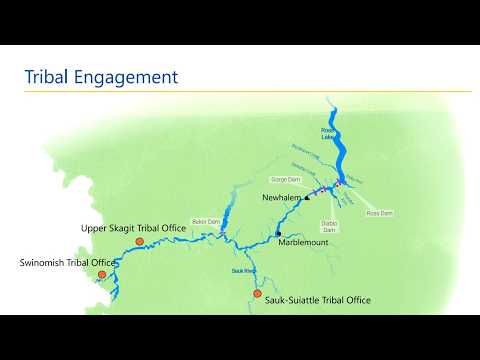
Public speakers and tribal leaders attending the meeting urged the committee to support the agreement while stressing close oversight and a public commitment to implement fish‑passage measures in good faith. Swinomish Council Member JJ Wilbur said the watershed is tribal homeland and called the accord “a win for everybody including the salmon.”
Sauk‑Suiattle tribal chair Nino Maltos II told the committee the settlement is not a giveaway but overdue mitigation: “Just consider it past due rent,” he said, arguing the funds and program elements address decades of impacts to tribal lifeways.
Skagit County representative Will Honing urged the council to secure public commitments from Seattle’s political leadership that City Light would implement fish passage in good faith and to ensure transparency on habitat projects that affect farmland and local infrastructure. Local farmland advocates also asked that large habitat dollars be aligned with the county’s salmon recovery and farmland protection plans.
Not all public commenters supported the package. Documentary producer Robert Londal said “all of the dams need to come out,” and questioned the effectiveness of costly fish‑passage technologies, while other speakers raised concerns about potential impacts to farmland and asked for clearer public engagement and oversight.
City Light staff also described the likely impacts to ratepayers during early implementation. Presenters gave an estimate of rate changes over 2027–2032 in the briefing materials and during the presentation; the staff presentation included differing characterizations of that impact in the meeting (see clarifying details). Townsend said the settlement includes measures intended to limit rate risk, including a firm cap on fish‑passage costs and phased implementation.
Next steps include coordinating a signing ceremony with tribal partners and the mayor in April or May, filing the agreement and an amended license application with the Federal Energy Regulatory Commission, and proceeding with public review and early implementation actions. The committee did not take a vote at the hearing.