Get Full Government Meeting Transcripts, Videos, & Alerts Forever!
Get email alerts on the Data Center Policy topic
No spam. Unsubscribe anytime.
Lansing City Council withdraws downtown data‑center rezoning amid strong public opposition
Summary
At its April 6 meeting the Lansing City Council and mayor announced withdrawal of the rezoning and associated contract for the proposed Deep Green data center after months of community concern over transparency, emissions and siting; residents urged a moratorium and new rules for data centers.
At its April 6 meeting the Lansing City Council and Mayor Shore announced the city and the applicant had withdrawn the rezoning request and related buy/sell agreement for the proposed Deep Green data center in downtown Lansing.
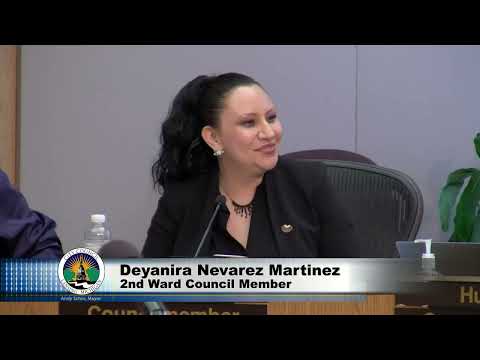
Council Member Navarz Martinez, who said she would vote no, framed the decision as a planning question: “Do I believe a power plant belongs in downtown Lansing? My professional opinion is no,” she told the council, urging stronger local controls and a requirement for discretionary review in commercial and industrial districts.
Why it matters: residents and civic groups told the council they feared health and environmental harms, inconsistent process and insufficient transparency from the Board of Water & Light (LBWL) and the developer. Multiple speakers cited emissions and long‑term public‑health implications, and community leaders asked the council to adopt a moratorium while a regulatory framework is drafted.
What the council and mayor said Mayor Shore told the council the items were formally withdrawn, not tabled, and that any new filing would have to restart the zoning process from the beginning. “These items have been withdrawn,” he said, adding that contracts and rezoning applications would start anew if refiled.
Council Member Navarz Martinez said the issue was not opposition to investment but a question of appropriate siting and transparency: “This decision is not about being anti-economic development, innovation or investment in Lansing. It is about the kind of development we choose, where we place it and who bears the impacts.”
Public concerns and claims Residents and local advocates used public comment to press specific technical and procedural claims. Raphael Solis Jr. told the council an academic calculation showed the fuel‑cell generators proposed for the project could emit roughly 105 million pounds of CO2 annually based on LBWL data; he said that figure did not include upstream methane. That claim was presented as a third‑party calculation during public comment and was not formally verified at the meeting.
Speakers also criticized the LBWL’s use of nondisclosure agreements and late disclosures, saying those practices undermined public trust and limited meaningful review of health and environmental impacts. Several callers urged the council to act on zoning and code changes to prevent similar proposals from being sited in dense, mixed‑use downtown neighborhoods.
Calls for action Multiple speakers urged immediate steps: passage of an ordinance to require discretionary review for data centers in downtown/commercial districts, and a temporary moratorium to give the city time to build a regulatory framework. Ivan Drossi said, “I call for city council to pass a moratorium on data centers … We need to buy ourselves some time so that we can pass a robust data center regulatory framework.”
What’s next Council members and members of the city’s sustainability advisory groups signaled plans to draft environmental sideboards and zoning changes; a draft resolution on data‑center standards was reported to be with the city attorney (per public comment). The mayor clarified that any future applicant would be required to refile and undergo the full public process.
Context and limitations The withdrawal removes the specific rezoning and contract from the council’s current agenda but does not ban data centers in Lansing. Residents and council members described the outcome as a pause rather than a final policy change; future proposals could return and would require the full planning and public‑hearing sequence. Technical claims made in public comment (emissions, health‑cost estimates) were not adjudicated at the meeting and remain unresolved.
The council moved on to other business after public comment; no further formal action on this proposal was taken at the April 6 session.