Get Full Government Meeting Transcripts, Videos, & Alerts Forever!
Get email alerts on the Pensions topic
No spam. Unsubscribe anytime.
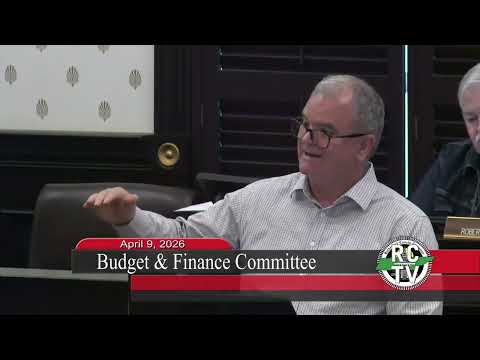
Tennessee Treasury advisor outlines pension options as Rutherford County adopts 13.62% TCRS rate
Summary
A Tennessee Treasury official reviewed the county's pension liabilities and options; after questions about unfunded liabilities and benefit design the Budget Committee voted 7-0 to set the TCRS employer contribution rate at 13.62% for FY2026—27.
Drew Freeman, senior director of financial empowerment with the Tennessee Treasury Department, told the Rutherford County Budget Committee that the county's defined-benefit pension obligations are driven by service years and salary and that the plan's actuarial snapshot shows rising costs.
Freeman explained how the Tennessee Consolidated Retirement System (TCRS) calculates employer rates and walked commissioners through two rate sheets: the current employer contribution of 12.35% for fiscal 2025—26 and a proposed actuarial rate of 13.62% for fiscal 2026—27. He said the pooled plan's unfunded accrued liability has increased to about $41.6 million and that, because employees do not currently contribute under the county's legacy non‑contributory plan, upward pressure on the employer rate is expected.
The presentation called out three cost drivers: (1) higher average salaries among active employees (annualized payroll shown rising from about $149 million to roughly $165 million), (2) increased retiree benefit payments (about a $1.3 million year‑over‑year increase), and (3) an unfunded actuarial liability that the actuary phases into employer rates over time.
Commissioners pressed Treasury on options that would affect future rates. Freeman said options that apply only to new hires include requiring employee contributions (he gave a typical example of a 5% employee contribution) or adopting a hybrid plan that pairs a reduced TCRS multiplier with a state 401(k) component; either approach affects only new hires and phases in slowly. He also confirmed that any change would not affect current employees or retirees on the legacy plan.
Chairman Phillips and others emphasized the dollars at stake: staff noted the county's general fund pension payments were roughly $11.9 million in the prior year and that the proposed rate implies nearly $2 million more pressure on next year's general‑fund budget. Commissioners asked Treasury to return with more analysis and cost projections over several budget years.
After discussion the committee voted to adopt the actuarially determined contribution (ADC) of 13.62% for the coming fiscal year. The motion to adopt the rate was moved and seconded; a roll call recorded unanimous support from commissioners present.
The committee also asked Treasury to appear before the full commission for additional briefing and to provide comparative scenarios if the county wished to consider phased alternatives for new hires.
Ending: The committee sent the adopted rate forward as the county's required actuarial contribution for the FY2026—27 budget process; staff will include the 13.62% figure in budget materials to the full commission.