Get Full Government Meeting Transcripts, Videos, & Alerts Forever!
Get email alerts on the Curriculum topic
No spam. Unsubscribe anytime.
Board previews pilot of AI and teen internet-safety curriculum aligned with state law
Summary
District staff described a year-and-a-half effort to create an AI framework for instruction and proposed piloting Wired Human's nine-module middle-school curriculum to meet the state's teen social media and internet-safety law; board members raised academic-integrity and parent-engagement concerns.
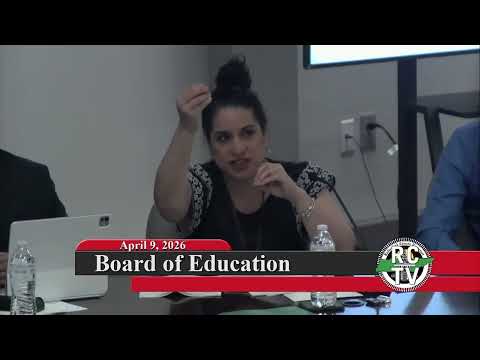
Rutherford County Schools' curriculum leaders told the board on April 9 that they have been working for more than a year on an AI guidance framework for teachers and students and are proposing to pilot a Wired Human middle-school curriculum that aligns with the state's teen social media and internet safety guidance law (effective fall 2025).
Dr. Gastineau described the plan as a set of age-appropriate guidelines and "a way for us to have a unified message in approaching how we responsibly address the portions of this law in a way that makes sense for us." She said the district sought to pair teacher training with counselor-led support for the curriculum's most sensitive modules and to include parent engagement and opt-out mechanisms that mirror state samples.
Board members expressed both support and caution. Concerns centered on academic integrity, the risk that students could misuse AI tools, and the need to craft assignments that preserve in-class writing and critical-thinking skill development. One board member asked about length and pacing; staff said the Wired Human pilot is "nine modules that are designed to be 45 minutes" each but noted that implementation could vary by teacher and by module.
District staff said they envision parent nights, transparent sample letters and online availability of materials where feasible; they proposed summer professional development and teacher training so classroom assignments can be designed to reflect acceptable and unacceptable AI use.
The board did not vote on adoption at the April 9 meeting; staff said any curriculum adoption would return for board approval once details of pilot sites, parental communications and counselor involvement are finalized.