Get Full Government Meeting Transcripts, Videos, & Alerts Forever!
Get email alerts on the Building Safety topic
No spam. Unsubscribe anytime.
Consultant says Weed City Hall clearance sampling acceptable; recommends exterior envelope checks and monitoring
Summary
A forensic-analytical consultant reported that post-remediation air samples at Weed City Hall were within acceptable levels, recommended checking and repairing window/ exterior seals and routine building monitoring, and advised re-testing only if building conditions change.
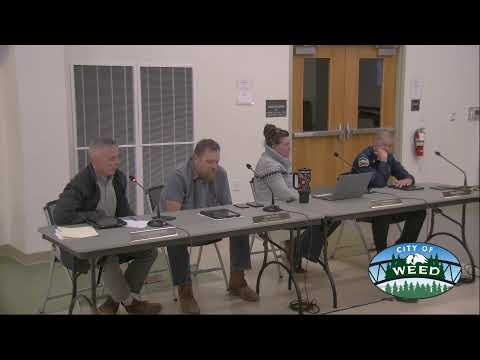
A forensic-analytical consultant told the Weed City Council that City Hall's recent remediation returned indoor air quality to acceptable levels and that staff may reoccupy the building while tracking exterior-envelope maintenance.
John Curtis of Forensic Analytical Consulting Services summarized inspections and cleaning performed after a December inspection and subsequent remediation work. Curtis said post-remediation clearances and recent air samples were not elevated and that areas where materials were removed or cleaned were evaluated and built back to a presentable state. He recommended evaluating window performance and exterior weathering to avoid recurrence of water intrusion and subsequent microbial growth.
Curtis explained testing methods during a question-and-answer session: "An aggressive test ... agitates the space and lifts dust into the air," he said, and noted that the prior consultant had used an aggressive sampling method while his team used a passive strategy aimed at measuring representative occupant conditions. He added that aggressive sampling has a place in controlled environments but can produce results that do not reflect typical occupancy.
Council members asked whether staff could safely occupy the building; Curtis said, "Yes," and urged routine visual inspection and building maintenance. The council did not take action on the report; staff noted no formal motion was required and said they would coordinate any follow-up checks or remediation if conditions change.