Get Full Government Meeting Transcripts, Videos, & Alerts Forever!
Get email alerts on the Affordable Housing Planning topic
No spam. Unsubscribe anytime.
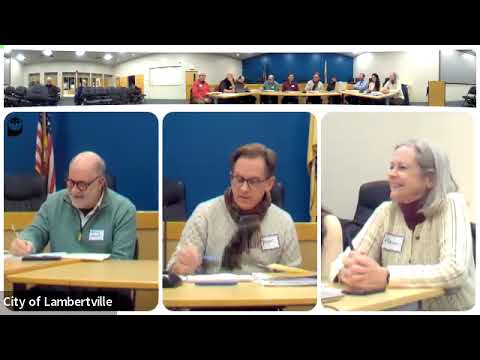
Lambertville committee opens work on fourth‑round housing plan, affirms DCA obligation and court filing
Summary
An ad hoc committee convened to begin drafting Lambertville’s fourth‑round affordable housing plan, confirmed the DCA obligation of 39 units, reviewed the city’s recently filed declaratory‑judgment action seeking court confirmation and immunity, discussed compliance mechanisms and candidate sites, and set a regular meeting schedule.
Lambertville’s ad hoc committee on affordable housing opened its work on the city’s fourth‑round housing element, the chair said, confirming the municipality has stipulated to a Department of Community Affairs (DCA) obligation of 39 units and has filed a declaratory judgment action to seek court confirmation and immunity from builder‑remedy lawsuits.
“We are conducting these meetings as open public meetings,” the chair said at the start of the session, noting meetings will be recorded, minutes prepared by the city clerk and the group will try to limit sessions to 90 minutes while ending with a public comment period.
The committee was briefed on the near‑term timeline: interested parties have until Feb. 28 to challenge the stipulated DCA number; if there is no successful challenge the city’s obligation will be presumptively valid on March 1. The chair said the housing element and fair‑share plan must be written and the crediting documentation prepared and submitted by the planning board’s adoption deadline, with the committee aiming for a June 30 target and noting extensions are available by request.
Members discussed how the obligation’s components fit together: the DCA number is 39 units, municipalities may claim up to 25% in bonus credits (reducing base units to be produced), and prior‑round carryover (including five units associated with the police station site) must be reconciled as the committee crafts a holistic approach. The chair characterized the legal filing as routine and protective: the declaratory judgment outlines the city’s history of compliance, asks a judge to confirm the obligation and approve the city’s spending plan so trust funds may be used for compliance.
Committee members and staff reviewed compliance mechanisms that can satisfy the obligation: inclusionary zoning (market development with an affordable set‑aside), 100% affordable projects (tax‑credit or nonprofit builds, often requiring municipal land or subsidy), buy‑downs that convert market units via deed restrictions, and accessory dwelling units (ADUs) when deed‑restricted for the required term. The chair emphasized balancing “we have to make numbers but also…make those numbers in a way that really takes care of people,” and members urged clear, public‑facing materials (FAQs, infographics) to explain impacts on schools, public safety and utilities.
Potential projects and sites were raised for follow‑up: converting an apartment in the library to a deed‑restricted family unit, a possible Habitat for Humanity project near the Log Cabin (potentially up to six units), and underused commercial parcels such as the CVS lot, the bank site on Bridge Street and a property on North (295) as candidates for redevelopment opportunities that could count toward any vacant‑land adjustment. The chair noted that if a vacant‑land adjustment reduces the land component, the city must identify realistic redevelopment opportunities that can produce at least 25% of the resulting unmet need.
Public commenters asked whether the cabin and Clum Farm area were included in potential Habitat sites and urged the committee to identify redevelopment targets now. Committee members echoed the need to prioritize family rental units over additional senior units, given the city’s carryover of senior units from prior rounds.
The committee agreed to a meeting cadence through June — the group set regular meetings for the second Monday of each month at 8:30 a.m. and the chair said she would circulate a backward timeline showing the dates required for planning‑board filing and public notice. The meeting ended with a voice vote to adjourn.
Next steps: the committee will draft a mission statement and a public FAQ, develop a backward calendar to meet planning‑board deadlines, investigate candidate sites and deed‑restriction status, and reconvene at the scheduled time to review draft plan elements and supporting crediting documentation.