Get Full Government Meeting Transcripts, Videos, & Alerts Forever!
Get email alerts on the Economic Development topic
No spam. Unsubscribe anytime.
House approves creation of a Maryland economic "Future Board" despite fiscal concerns
Summary
The House passed SB 770 to establish a temporary Maryland's Future Board to study competitiveness and recommend strategic investments; proponents argued for planning and alignment, while critics objected to the initial $1.7 million fiscal outlay and creating another board during a budget shortfall.
The Maryland House of Delegates voted to approve Senate Bill 770, which establishes a temporary Maryland's Future Board to evaluate the state's economic competitiveness and recommend strategic investments in industries such as AI, advanced manufacturing and quantum technologies.
Supporters, including the floor leader and members of the House majority, described the bill as a modest, strategic investment that will improve coordination across agencies and sectors. The floor leader said the board would be temporary and intended to produce a comptroller-led economic analysis to inform targeted investments. The bill includes an initial fiscal note discussed on the floor of approximately $1.7 million, with most of that seeded as an initial Maryland's Future Fund in the Commerce Department.
Opponents objected to creating another board and questioned the timing and cost. Several delegates emphasized the state's current fiscal challenges and warned that the $1.7 million initial investment could expand depending on projects the board recommends. "We have a huge budget deficit; now is not the time to create a visionary board," one critic said, urging a focus on tax competitiveness instead.
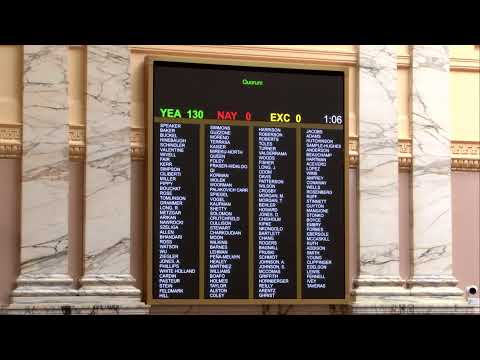
The floor debate highlighted familiar policy trade-offs: strategic, targeted public investments versus the need to constrain spending and prioritize tax relief. Backers pointed out broad bipartisan support for the House cross-file and framed the board as a planning mechanism intended to focus limited resources more effectively. The House recorded 108 votes in favor and 18 opposed; the bill was declared passed.
Next steps: The newly authorized board and the Commerce Department will coordinate to implement any initial studies and to determine whether and how recommended projects might be funded. The fiscal note suggests a $1.7 million starting allocation but future funding would depend on subsequent legislative actions.
Vote at a glance: - SB 770 (third reading): Passed, yeas 108, nays 18.
Source: House floor debate and roll calls, March 24, 2026.