Get Full Government Meeting Transcripts, Videos, & Alerts Forever!
Get email alerts on the Noise Amphitheater topic
No spam. Unsubscribe anytime.
Washington council presses for amphitheater-specific noise, traffic and licensing rules
Summary
Council members asked staff to craft a dedicated amphitheater ordinance after reviewing peer cities’ noise controls; discussion centered on decibel-based limits, permit oversight, hours, parking, lighting and enforcement, with staff noting equipment and training needs to measure dB levels.
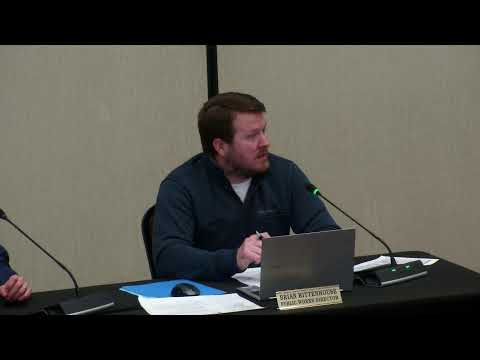
Council members in Washington on March 10 signaled support for a tailored ordinance to govern any future amphitheater, focusing on measurable noise limits, traffic and licensing requirements.
Planning director John Olant reviewed noise rules from municipalities such as Aurora, Bloomington and Ottawa and suggested options including an event permit system, quantified decibel limits and activity-based exemptions. "One thing could be to consider adopting a permit system that would most have the police department in charge to oversee each event on an event-by-event basis," Olant said, and he noted that the city currently applies a quantified dB limit only for industrially zoned properties.
Alderman Butler and other council members said an amphitheater-specific ordinance could address a wider set of concerns than the general noise code — including parking, traffic control, litter, security and permit withdrawal for repeated violations. "If we get to the point of negotiating a letter of intent, for example, that says this is the expectation and this is how we're going to do it, we can address all of these things," Butler said. Several members favored decibel thresholds that apply across the day and not only during overnight quiet hours, and suggested establishing an enforcement perimeter around the stage.
Staff cautioned that quantifying noise would require equipment and training and that the department would need to define how and where dB readings are taken (for example, at property lines or at roadways). "If we were to have a quantifiable level, I think that makes sense; we would need to be cognizant of [purchasing] equipment and having appropriate training," a staff member said.
Council members also debated hours and mitigation: some urged a 10 p.m. or 11 p.m. cutoff for amplified sound, while others warned that stricter hours could limit booking options and venue viability. Several members proposed a permitting approach that could limit the number of large events per year and include negotiated mitigation measures such as earlier end times, lighting controls and required traffic management plans.
Next steps: staff will draft options for an amphitheater-specific ordinance (permit structure, potential decibel standards, hours and enforcement), and return sample language to the council for further direction.