Get Full Government Meeting Transcripts, Videos, & Alerts Forever!
Get email alerts on the Education Funding topic
No spam. Unsubscribe anytime.
CRAG members press lawmakers for sustained education funding, reject one‑time ‘property stabilization’ grant
Summary
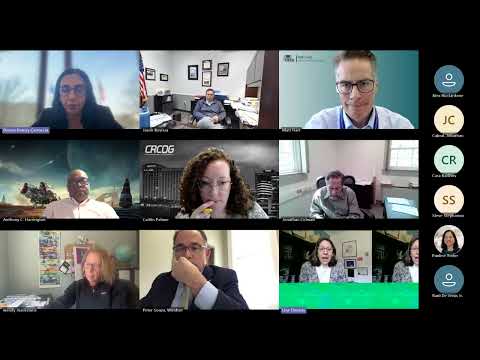
At a March 26 CRAG legislative committee meeting, regional municipal leaders urged lawmakers to pursue ongoing ECS formula changes rather than a one‑time "property stabilization" grant, and agreed to a coordinated communications push and meetings with House leadership and the governor's office.
At its March 26 meeting, the CRAG legislative committee pressed state leaders to prioritize durable changes to school funding over a proposed one‑time "property stabilization" grant, saying a temporary payment would not solve municipalities' long‑term budget gaps.
"A one‑time grant really doesn't achieve any kind of purpose for us," said Lisa, the committee's legislative chair, arguing that towns that must pass balanced budgets would still face cuts to services and public‑safety infrastructure if recurring aid is not increased. Committee members said the core problem is a flat funding formula that has not kept pace with costs.
Donna, a CRAG staff member who tracks legislation for the region, briefed the committee on the calendar constraints in Hartford, noting the House had about 15 session days remaining before adjournment on May 6. That compressed schedule, she said, means only a small window remains for nonpriority bills.
Members identified two clear policy preferences: press for an ongoing increase to the Education Cost Sharing (ECS) formula, or at a minimum, secure multi‑year adjustments rather than a single disbursement. Jason Bowser, the board chair, and others argued a formula tweak offers greater stability: "Doesn't that just cause us a problem next year when that one time isn't there?" he asked.
Several members proposed a tactical two‑track response: (1) amplify municipal messaging to the public and the delegation now, and (2) pursue longer‑term structural work after the session. Steve, a municipal official, urged proactive public engagement, saying local budgets and revaluations mean many towns already face steep property‑tax increases and cannot absorb short‑term patches.
To push the message before the legislature completes its work, the committee agreed on immediate steps. Matt and Donna will draft a communications package for Jason Bowser (board chair) and Lisa (legislative committee chair) to sign, request meetings with House leadership and the Office of the Governor, and seek a virtual briefing with the full regional delegation. Members were also encouraged to meet legislators in person at the Capitol when feasible.
Why it matters: committee members said flat state aid increasingly shifts costs to property taxpayers, producing either tax hikes or service cuts at the local level. With limited session days remaining, they said public pressure and direct engagement with leadership are the most practical levers left this year.
Next steps: Matt and Donna will prepare the communications and seek leadership meetings; the committee plans to regroup after the session and at its June strategic visioning session to develop longer‑term, structural advocacy.