Get Full Government Meeting Transcripts, Videos, & Alerts Forever!
Get email alerts on the Public Safety topic
No spam. Unsubscribe anytime.
Fort Myers Beach safety panel outlines CERT revival, e-bike outreach, lightning sensors and crosswalk fixes
Summary
At its March 17 meeting the Fort Myers Beach Public Safety Committee reviewed a menu of safety measures — from resurrecting a CERT volunteer program and distributing visitor safety information tied to Florida's new e-bike rules to reinstalling emergency call boxes, installing lightning‑detection sensors and improving downtown crosswalks — and agreed to research costs and coordinate with town staff and the fire department ahead of an April 28 update.
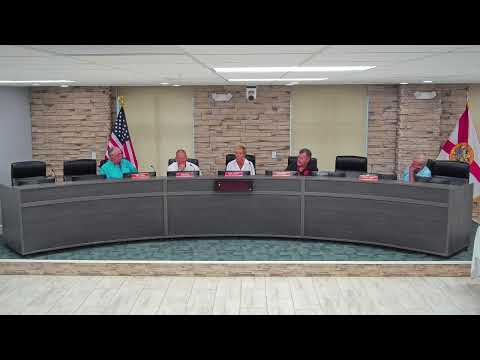
Fort Myers Beach — The Public Safety Committee on March 17 reviewed a broad set of community safety proposals and assigned members to research costs and next steps, including contacting town staff and the fire department.
The committee chair opened the meeting by reading a list of potential initiatives the group had discussed with town council and the town manager, and said many items require coordination with other jurisdictions such as the Florida Department of Transportation (FDOT) or Lee County. "The definition of insanity is just keep repeating the same thing over and over again with no results," the chair said as the committee laid out priorities.
Committee members agreed to pursue four near‑term workstreams. Ron Benock volunteered to contact the Fort Myers Beach Fire Department to explore resurrecting a community emergency response team and to check whether FEMA CERT training could be used or coordinated. "I'll take that on and I'll contact the fire department," Committee member Ron Benock said.
The group also prioritized visitor education tied to the recent state changes for electric bicycles. Members noted Florida enacted SB 382, which includes provisions such as a 10‑mile‑per‑hour speed limit when passing within 50 feet of pedestrians and a requirement for audible signals when overtaking. The committee asked the town public information officer to help draft materials for hotels, short‑term rental hosts and bike‑rental operators and to consider reviving a bell‑distribution campaign for rental bikes.
On emergency infrastructure, committee members asked town staff to confirm whether a storm‑damaged call box by the library would be reinstalled and whether future installations could include AEDs or automatic 911 connections. "It got nuked. They never put it back," a member said of the pre‑storm call box; the committee asked staff to follow up and report back.
Members discussed installing lightning detection and siren systems — similar to systems used on golf courses — to warn beachgoers and clear vulnerable areas. Preliminary vendor research cited in the meeting suggested a sensor and siren can cost on the order of $8,000–$10,000 each, excluding full installation; the committee asked members to research exact costs and whether resorts or new developers might partner on funding rather than relying on grassroots fundraising.
Downtown pedestrian safety was a recurring theme. The committee recommended temporary water‑filled jersey barriers and privacy screening in high‑congestion areas such as Times Square and Margaritaville to reduce jaywalking and limit driver distraction, but members flagged jurisdictional questions because parts of the boulevard are under county or state control and asked the town liaison, Tom Yazo, to provide updates on planned work.
The committee removed a pothole program from its active agenda, discussed creating a centralized calendar of community beach cleanups, and set its next meeting for April 28, 2026, at 9:00 a.m. The meeting closed after a motion to adjourn was moved and seconded.
Committee members said they would return with more detailed cost estimates and any available town or county plans so the panel can refine which items are feasible for the committee to lead versus which should be referred to the town, county or state agencies.