Get Full Government Meeting Transcripts, Videos, & Alerts Forever!
Get email alerts on the Constitutional Law topic
No spam. Unsubscribe anytime.
Panel addresses constitutional challenge to witness-intimidation statute
Summary
The Appeals Court heard arguments in Commonwealth v. Candelo over whether the statute's 'reckless' culpability standard is overbroad after Counterman and whether jury instructions allowed conviction without proof of specific intent.
Defense counsel Owen Murphy urged the panel to invalidate the statute’s reckless-intent provision or at least reverse his client's conviction as applied, arguing that, after the Supreme Court’s decision in Counterman, the recklessness standard can sweep into protected speech and chill legitimate "justice-seeking" conduct. "The reckless intent provision in the witness intimidation statute is unconstitutional," Murphy told the court.
Murphy raised examples — including civil-litigation threats, emotional appeals and other nonviolent communications — to show how the statute could criminalize protected speech if recklessness suffices. He cited Commonwealth v. Cruz and argued the statute lacks the limiting elements necessary to avoid overbreadth.
Assistant District Attorney Cynthia Von Flattern responded that the jury was instructed on specific intent as well as recklessness, that the record supports the verdict and that an abuse-prevention order and the defendant’s conduct supported the jury’s findings. "The Commonwealth would ask that you affirm the verdict of the jury," she said, emphasizing contextual evidence of intent and the prospective hearing on related proceedings.
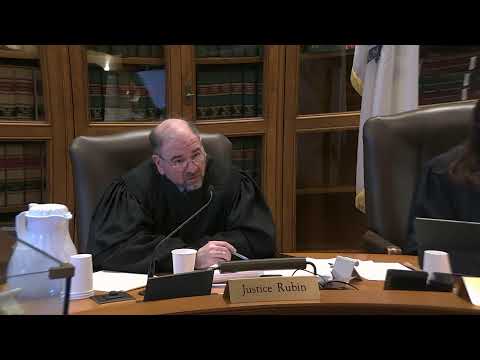
The justices pressed both sides on where protected speech ends and intimidation begins, on the role of the abuse-prevention order in assessing intent, and whether an as-applied or facial challenge should carry the day. The panel took the case under advisement for decision by written opinion.