Get Full Government Meeting Transcripts, Videos, & Alerts Forever!
Get email alerts on the Student Representation topic
No spam. Unsubscribe anytime.
Student candidates in Anne Arundel debate student voice, mental health and device rules
Summary
Three student candidates for the 2026–27 Anne Arundel County Public Schools student member of the board debated platforms including expanding student outreach, mental-health resources, AI and device policies, and directing resources to schools with greater needs.
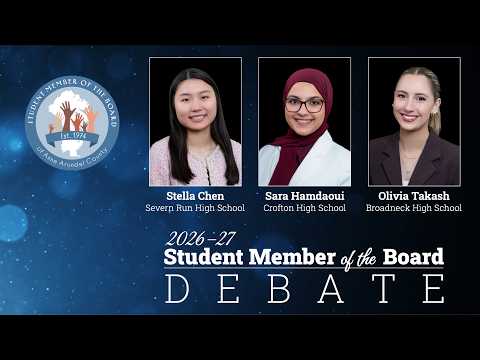
Three students seeking the 2026–27 student member seat on the Anne Arundel County Public Schools Board of Education debated priorities Wednesday night in a forum moderated by Michelle Fadel, cross president. The candidates—Olivia, Sarin Dowie and Stella—traced their campaigns to personal experiences of feeling unseen in school and offered competing approaches to student outreach, mental-health support and school policy.
The debate centered on three recurring pledges: broaden student engagement, expand mental-health resources and make resource allocation more equitable. "No student should feel invisible," Olivia said in her opening remarks, citing her experience as a military child who moved between schools. Sarin Dowie, a junior at Crofton High School, framed her platform in three pillars—engage, equip and empower—calling for student town halls and workshops explaining how board decisions are made. Stella emphasized representation and said the role should make board decisions reflect the countys diverse student population.
On student mental health, candidates proposed specific steps to expand access. Several said they would promote free, clinically vetted online resources for students and work to increase promotion of Maryland's student mental-health leave and counseling access. "Bringing more free and accessible mental-health resources to Anne Arundel County Public Schools" was offered as a priority by multiple speakers.
The candidates were unanimous that artificial intelligence (AI) tools cannot be eliminated from schools and that teaching responsible use should start early. They proposed a mix of advisory lessons, class-specific policies and extensive student consultation to shape county guidance. Regarding phone and device rules, the students recommended preserving limited access for lunch and emergency contact while soliciting input from middle and elementary students before setting countywide restrictions.
Equity in school resources and extracurricular offerings drew detailed attention. Candidates described seeing unequal material conditions across campuses and urged the board to re-assess allocations based on on-the-ground needs rather than equal per-school distributions. Suggestions included school visits, cost assessments for different programs (for example specialized equipment for technology pathways), and pursuing outside partnerships to fund extracurriculars where budgets are constrained.
On safety and bullying, the candidates said harassment is unacceptable and called for deeper prevention work, better reporting channels and attention to root causes. Each candidate said they would prioritize direct communication channels with students—surveys, forms and in-person visits—to ensure policy decisions reflect student perspectives. During closing remarks, Stella said, "Your voice is not small. Your voice is powerful," and all three urged voters to participate in the April 16 election referenced at the event.
The forum was run under rules set by the moderator: no audience questions, timed answers and a livestream on ACPS platforms. The candidates indicated follow-up steps they would pursue if elected, including student town halls, increased liaison work with school advisors, and advocating for county- and state-level testimony where policy changes are needed. The debate did not include any formal Board actions or votes.
Next steps: the candidates asked students to engage with their campaigns and noted an Instagram Live event and an April 16 election date mentioned at the forum. The Board will decide the student member after the election process; the candidates outlined priorities they would raise if elected.