Get Full Government Meeting Transcripts, Videos, & Alerts Forever!
Get email alerts on the Budget topic
No spam. Unsubscribe anytime.
School finance chief warns of more than $14 million in possible revenue losses over three years
Summary
District finance presenter told the board the district's audited fund balance is 40.82% but forecasted planned deficit spending of about $9.5 million and warned of combined impacts from enrollment loss, potential federal Title cuts, Prop C declines and assessment caps that could exceed $14 million over three years.
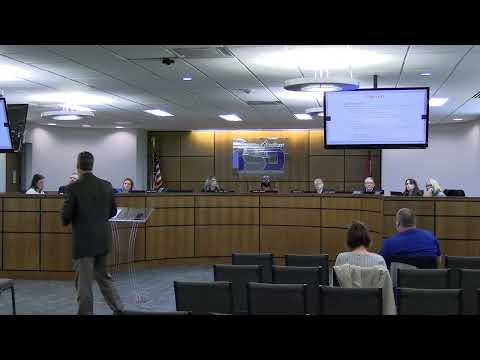
Anthony J. Mundane, vice president of the board of education, opened a special meeting Feb. 10 at central office and turned the floor over to the district's financial presenter, Dr. Hurl, for a budget update.
Dr. Hurl said the district's most recent audited fund balance was 40.82% but cautioned parts of that figure reflect timing differences in summer-school payments. He told the board he had previously recommended keeping fund balances above 30% to guard against shocks.
"We are sitting at 40.82%," Dr. Hurl said. He described the current forecast as the "good, the bad, and the ugly," and said that while some pressures were expected and planned, a combination of factors threatens the district's revenues.
The presenter said the district is projecting roughly $9.5 million in planned deficit spending, driven largely by the large salary and benefit increases the district granted in recent years. He added that enrollment is down 524 students compared with the same time last year and that the state's foundation formula rules mean the district likely will not see the fiscal impact of that enrollment decline until fiscal year 2028.
Dr. Hurl also highlighted specific revenue risks: he projected Prop C (local sales-tax) receipts could fall about $500,000 as purchasing and assessed-valuation changes flow through, and said the district had been told to expect as much as a 20% reduction in some federal Title funds next year, which he estimated could equal about $1.2 million if that cut is enacted.
Local property-tax collections were another concern. "As of this morning, we'd received $53.51 million" of a budgeted $62.79 million for the general fund, he said, placing the collection rate at about 85.2% and describing an approximate $9.3 million shortfall in ad valorem receipts at that snapshot in time.
Dr. Hurl identified state-level policy changes he said are reducing assessed valuation and local revenue. He cited Senate Bill 190 (a senior property-tax freeze referenced in the presentation) and a 15% cap on assessment increases as drivers of assessed-valuation declines. He estimated residential assessed-valuation losses in the hundreds of millions of dollars and said commercial assessment caps could represent a near-term revenue reduction of roughly $3 million.
Summarizing the combined effects, Dr. Hurl said the district could face more than $14 million in reduced revenues over the next three years from the combined risks of foundation-formula changes, Prop C declines, potential federal Title cuts and local assessment losses.
Board members asked clarifying questions about timing and whether late property-tax bills could produce a rebound in collections; Dr. Hurl said weekly receipts sometimes raise capture rates in January and February but that the anticipated rebound would not be enough to close the multi-million-dollar gap.
A board member asked whether a large development mentioned in the meeting (referred to in the transcript variously as Nebas, Nebius and Nebus) could offset the expected losses. Dr. Hurl said initial building-related revenue could be modest in the near term but projected that, as personal property from the project comes online, the district could see substantial long-term assessed-valuation increases (he cited a projection of about $27 million annually to the district by the time personal property is assessed).
In closing his presentation, Dr. Hurl advised maintaining strong cash reserves and cautioned that if the district deficit-spends without a credible plan to replenish reserves, the shortfall could compound in subsequent years. The board followed with additional questions and brief discussion; no formal budget action or vote occurred at the meeting.
Ending: The board did not take formal budget votes at the special meeting; Dr. Hurl's presentation concluded with the board seeking further detail and continuing oversight steps were implied as next actions.