Get Full Government Meeting Transcripts, Videos, & Alerts Forever!
Get email alerts on the Board Ethics topic
No spam. Unsubscribe anytime.
Board ethics training stresses limits on individual action, confidentiality and social media rules
Summary
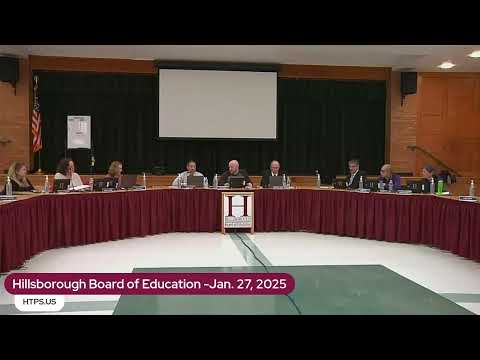
At its Jan. 27 meeting the Hillsborough Township Public School District board received annual ethics training emphasizing that board members have only express statutory authority, must recuse where conflicts exist, preserve confidentiality for personnel and student matters, and exercise caution on social media.
The Hillsborough Township Public School District board heard its annual ethics briefing on Jan. 27, in which the presenter summarized legal boundaries for board conduct, recusals, confidentiality and social-media use.
"We have only express authority, not implied authority," the presenter said, explaining that the board can act only on powers delegated by state statute and that most administrative decisions rest with the superintendent. The presentation emphasized that board action generally must occur at a public meeting with a quorum present and warned that e-mail or text-message discussions among a quorum risk violating the Open Public Meetings Act.
The trainer outlined the difference between abstaining and recusing: a recusal is required where a member has a personal or financial interest and effectively counts as a non-vote; an abstention can be used where a member feels insufficiently informed. Several recent school ethics commission decisions were reviewed to illustrate prohibited conduct, including cases in which members were disciplined for endorsing candidates in an official capacity or remaining in supervisory roles that created conflicts.
Confidential personnel and student matters were cited as standard reasons for executive session, and the presenter noted that breaches of confidentiality can create legal exposure for the board. On social media, the presenter urged board members to identify when they are speaking as private citizens and to avoid using the platform to resolve complaints that should go to the superintendent.
The training concluded with instructions on advisory opinions from the school ethics commission and procedural reminders for referring complaints to administration before taking board-level action. No formal vote resulted from the presentation; it was educational and procedural in nature.