Get Full Government Meeting Transcripts, Videos, & Alerts Forever!
Get email alerts on the Traffic Calming Program topic
No spam. Unsubscribe anytime.
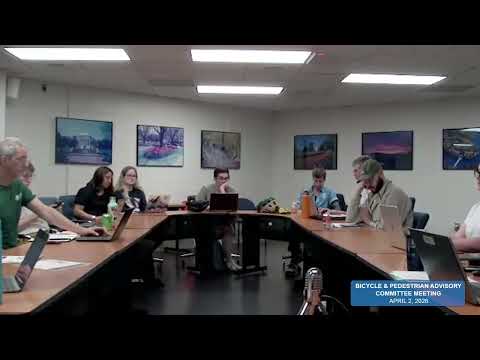
BPAC debates 'trafficcoming' successor to quick builds, urges staff briefing on Fifth Street pilot
Summary
BPAC members reviewed a proposed traffic-calming program modeled on Harrisonburg’s scoring system, discussed funding and project prioritization, and pressed traffic engineers to present details and testable designs for a controversial Fifth Street demonstration pilot.
James Van Brinken presented a proposed successor to Charlottesville’s "quick builds" program, outlining a resident-application process, a public scoring metric that weights speed and traffic volume heavily, and a neighborhood-focused annual implementation model followed by a 12-month review.
"Residents apply for streets and streets are scored," Van Brinken said, describing Harrisonburg's approach as a model for prioritizing work by combining engineering metrics with proximity to parks and schools. He urged the committee to define criteria that incorporate perceptions of safety as well as traffic-engineering measures.
Committee members asked how to move temporary test installations toward durable, permanent improvements if pilots succeed. Staff clarified several funding sources exist—an annual neighborhood transportation CIP source (figures discussed at roughly $100,000/year) and a remaining account balance the group cited at about $200,000—and warned that municipal budgeting and CIP timing constrain implementation.
Several members pressed for robust pilot design and multi-season evaluation; they warned that cheap temporary materials (flex posts) have failed in place and can undercut the validity of a trial. One committee member criticized the proposed Fifth Street pilot, saying it risks being set up to fail if planners close a travel lane without clearly signaling the space for bicyclists.
"I am afraid that it's a plan designed to fail because they aren't going to tell anyone you can ride your bike here," said Josh Carp during the discussion, urging staff to bring traffic engineers to the committee for a full public presentation before the design goes to council.
Why it matters: members said the committee should have a clear role shaping criteria so traffic engineering does not rely solely on speed/volume thresholds; they want pilots that are representative of the intended permanent design, multi-season data collection and early fire/EMS access testing to ensure emergency services can operate safely.
Next steps: the committee asked staff to invite traffic engineering staff (Brennan/Brendan and Caleb Smith) to present detailed proposals for the Fifth Street demonstration and to place the trafficcoming program on a future agenda for committee review prior to council consideration.