Get Full Government Meeting Transcripts, Videos, & Alerts Forever!
Get email alerts on the Audit topic
No spam. Unsubscribe anytime.
LAUSD receives clean audit but auditors flag payroll accruals and state compliance shortfall on teacher-salary test
Summary
Simpson & Simpson issued an unmodified opinion on LAUSD's June 30, 2025 financial statements but identified $21.7 million of payroll accrual adjustments, federal and state compliance findings (state teacher-salary test ~ $44M exposure), and recommended stronger IT vulnerability remediation timing and monitoring.
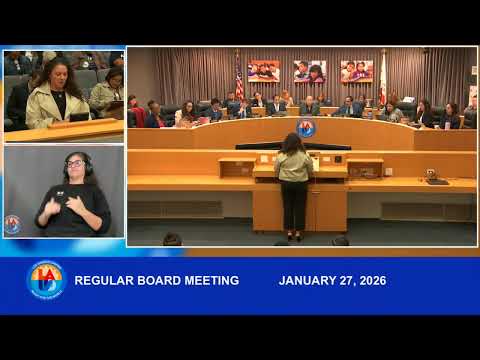
Simpson & Simpson presented the Los Angeles Unified School District's audited financial statements for the year ended June 30, 2025 at the board's Jan. 27 meeting, issuing an unmodified (clean) opinion but noting several areas for corrective action.
Audit partner Joe Musa said auditors found a set of accrued payroll liabilities (about $21.7 million) that should be reversed and recommended a corrective-action plan. On federal compliance the audit identified three low-level noncompliance instances totaling about $117,000 in questioned costs. State compliance testing found 14 instances totaling about $47.7 million in questioned costs; roughly $44 million of that relates to the classroom-teacher salary test, where LAUSD reported teacher/payroll at 54.5% of general-fund spending versus the 55% threshold. The district intends to pursue a waiver to avoid the bulk of the potential penalty and is tightening monitoring procedures.
Auditors also raised internal-control recommendations. They noted documented processes for tracking vulnerabilities but recommended narrower remediation timing and stronger evidence that compensating controls are applied when patches cannot be installed immediately. District staff told the board they have upgraded IT controls since prior cyber incidents and that compensating monitoring controls were in place when remediation timelines extended over the auditor's best-practice window.
Board members pressed staff on monitoring and transparency, requested year-to-year tracking of implemented audit recommendations, and asked for regular updates on transportation and procurement weaknesses the audit highlighted. The auditors said their follow-up will review corrective-action execution in the next audit cycle.