Get Full Government Meeting Transcripts, Videos, & Alerts Forever!
Get email alerts on the Clear Fork Reservoir topic
No spam. Unsubscribe anytime.
Study: Clear Fork Reservoir about 26% silted but meets current demand; citizens urge HABs review
Summary
A Stantec study reported roughly 5.5 million cubic yards of sediment (about 26% of capacity) in the Clear Fork Reservoir since 1949, and projected the reservoir can reliably meet current withdrawals; a citizens’ group asked the council to pursue expert review of harmful algal blooms (HABs) and potential preventive steps.
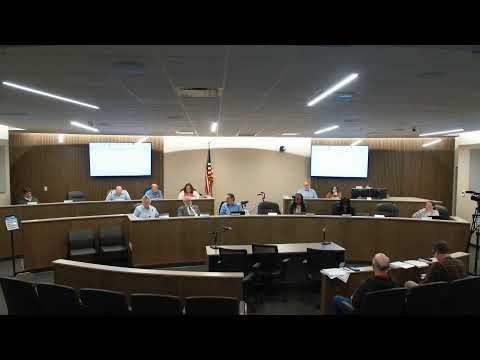
MANSFIELD — A year-and-a-half study of sedimentation at Clear Fork Reservoir found the lake has lost about 26% of its original capacity since it was built in 1949 but remains reliable under current water withdrawals, Stantec consultant Kyle Blakeley told the municipal and public utilities committee.
"The reservoir is performing well today," Blakeley said. He summarized survey work, comparisons to historical maps and a hydrologic model built from about 10 years of city elevation data. The study estimated roughly 5.5 million cubic yards of sediment have accumulated and reported that the reservoir currently supplies about 4.5 million gallons per day — roughly 40% of Mansfield’s total daily supply of about 9.5 million gallons.
Blakeley said the team modeled future scenarios and found the reservoir can remain functional through 2075 under current withdrawals and could support higher withdrawals (up to roughly 11 million gallons per day) before reliability would be compromised — assuming intake structures remain operational. He added that any large dredging program would likely carry "tens of millions" in costs and require five to 10 years of planning, permitting and funding work.
The study presented three broad classes of options: large-scale dredging to restore storage, a maintenance dredging program, and targeted removal at critical areas near intake structures. Non-dredging approaches such as upstream sediment controls, bypass pipelines and other strategies also were described as possible complements to dredging; the consultant said that permitability and property issues would need separate study.
Following the presentation, a citizen representing six environmental groups thanked the city for commissioning the study and urged council to add a specific review of harmful algal blooms (HABs) to the planning process. "What we want folks to consider is that climate change favors them and it disfavors us," the resident said, describing how larger, more intense rain events can increase runoff and nutrient loads that favor HABs. The citizen asked the committee to invite HABs experts and to consider a committee motion to study HAB risk and preventive steps.
City staff said they will continue monitoring water demand and sedimentation and noted they recently secured a 112-acre easement at the Clear Fork headwaters to provide a buffer for filtration and reduce runoff. The consultant said the screening-level sediment sampling in the study did not identify chemical constituents that would bar future dredging and that current sediment composition appeared manageable from a handling perspective.
No immediate dredging was recommended. Council members asked about triggers for action, whether grant funding might be available (the consultant said grant funds are not presently available although loan programs exist) and whether water-quality sampling for HAB toxins would be advisable as an adjunct study.
Next steps: continued monitoring of reservoir elevations and demand projections; further consideration of targeted studies on water quality and HABs if the council directs staff to convene experts.