Get Full Government Meeting Transcripts, Videos, & Alerts Forever!
Get email alerts on the School Finance topic
No spam. Unsubscribe anytime.
New Richmond leaders outline five-year levy to fill $4 million plant-revenue gap
Summary
District officials told a packed town-hall the ballot asks for a five-year levy to replace roughly $4 million lost after two local power-plant closures, while also describing $1.3 million in cuts (including staff reductions) and potential impacts on counseling, transportation and extracurriculars.
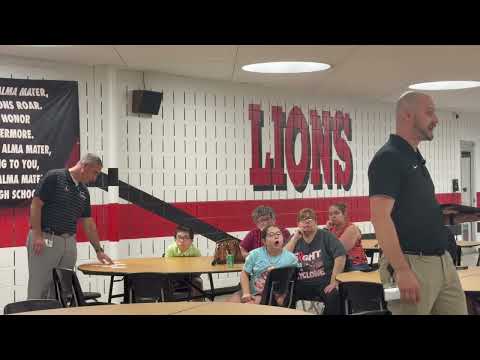
District officials in New Richmond Exempted Village laid out details of a five-year operating levy during a public question-and-answer session, saying the measure is intended to replace roughly $4 million in revenue lost after two local power plants closed and to stabilize the district’s budget for the next several years.
“I started officially in October,” said Brett Wood, the district treasurer and chief financial officer, introducing the evening’s format and answering the first question. “No, this is a fiveyear levy,” Wood said when asked whether the proposal would be permanent.
Why it matters: Administrators said state property revaluations have left the district appearing ‘wealthy’ on paper even as local revenues fell after plant closures. “That revenue stream of about four million is what is lost from the total closure and devaluation of those plants,” Mr. Floyd, an administrative leader, told attendees, framing the levy as a response to that gap and recent spikes in operating costs such as utilities.
What the district presented: Leaders described several concrete budget facts and trade-offs. Salaries and benefits make up about 72% of the operating budget for fiscal 2025—below commonly cited norms but still the largest expense. Last fiscal year the district spent about $14.7 million on salaries; the forecast projects roughly $13.7 million next year after a severance buyout and planned staffing reductions. The board and administration approved a $1.3 million reduction plan that includes 14 fewer teaching positions to align staffing with current enrollment.
Service impacts: Officials said the district contracts Counseling Source for student mental-health services and will reduce that contract from four counselors to three next year; caseloads would rise but remain within allowable limits, and Child Focus may provide itinerant support. Transportation for charter and private schools currently runs about four dedicated routes; officials said the district spends roughly $84,000 annually on transportation tied to athletics and private-school routes. Extracurriculars and clubs cost about $500,000 annually, with net losses (after gate revenue and pay-to-play) around $300,000 on a roughly $28 million total budget.
Revenue strategies: Administrators outlined partnerships aimed at new revenue—sharing services with neighboring districts (Felicity is paying for transportation/fleet services), expanded career-center programming that could bring in $100,000–$400,000 if scaled, and modest asset sales. They emphasized conservative forecasting for those streams and said they will continue pursuing state and federal grants where eligible.
Community outreach and vote logistics: The district plans a mailed postcard to all households (estimated cost ~$1,700 for about 5,000 addresses) and will coordinate additional informational mailings with community partners. Staff present stressed they can provide factual information but said district employees may not campaign; board members may advocate for the levy.
Administration’s outlook: If voters approve the requested five-year levy at the current amount, officials project the district will build cash reserves for the first four years of the levy and reach a more stable ending-cash position through fiscal 2029, though longer-term pressures—declining enrollment and phased reductions in some state reimbursements—could reverse that trend after the levy expires.
Public reaction: Residents at the meeting raised concerns about perceived historical mismanagement, state policy decisions that leave districts to cover shortfalls, and the effects of cuts on student services. A retired educator who spoke during public comment urged support for local schools and warned that repeated shortfalls threaten programs that parents value.
Next steps: Officials said they will remain after the meeting to answer additional factual questions and encouraged voters to contact their state representatives directly with personal, specific messages about the district’s funding situation. The board and administration reiterated they will publish levy information on the district website and continue community outreach ahead of the vote.