Get Full Government Meeting Transcripts, Videos, & Alerts Forever!
Get email alerts on the Zoning topic
No spam. Unsubscribe anytime.
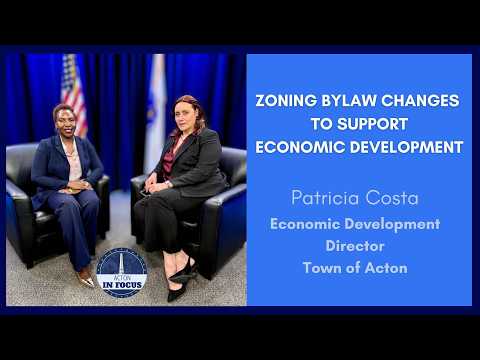
Acton economic development director outlines proposed zoning bylaw changes, innovation overlay and signage relaxations
Summary
Patricia Costa, Acton's economic development director, described proposed zoning bylaw changes to allow retail in some industrial areas, create an innovation overlay at Nagok Park to attract life‑science and tech firms, and expand temporary and taller signage; the measures are slated for Town Meeting on May 4–5.
Patricia Costa, Acton’s economic development director, laid out a package of proposed zoning bylaw changes that she said aim to attract and retain businesses, spur job growth and make permitting more flexible while keeping projects subject to local review.
Costa described four main groups of changes the town is considering: changes in permitted uses (including permitting select retail and service uses in some industrial zones under special permit), revised rules for signage, adjustments to rules for nonconforming lots, and creation of an innovation overlay district at Nagok Park intended to encourage manufacturing, office and life‑science development. “Zoning is a set of regulations that determine how the urban fabric is going to be occupied by housing, commercial and industrial activities,” Costa said, framing the bylaws as tools to shape economic activity.
The innovation overlay would allow a broader mix of uses and incentives for higher‑quality architectural design, Costa said, with the aim of drawing cutting‑edge technology and life‑science firms. She pointed to an existing company—identified in the program as Insulate—as an example expecting to expand locally and “add 500 new jobs in Acton” as it grows. Costa said expansions like that could create spillover effects that attract similar firms to the town.
On signage, Costa said the proposals would allow businesses to seek special permits for signs that are taller than current code permits and would expand authorization for rear‑of‑property signage for businesses that abut the rail trail and Great Road. The town would also increase the annual allowance for temporary business signs from 45 days to 90 days (not necessarily continuous), she said.
Costa emphasized that the proposed changes would not create blanket, by‑right allowances. Instead, she said, new uses in industrial areas and projects in the overlay would be subject to special permits, site plan review and departmental clearances. “It does not mean that these changes will be implemented by right,” she said. Applications would be reviewed by the planning department and could go before the planning board, select board, and in some cases the zoning board of appeals; projects must also meet requirements from the fire, building and health departments.
Costa said the draft bylaw changes are intended to implement recommendations from the town’s strategic economic development action plan, including support for small manufacturing and improvements to commercial aesthetics. Addressing Great Road specifically, she said the corridor faces high business turnover and septic‑system limitations that constrain certain types of businesses. To stimulate that corridor, Costa said the town has secured a state grant to provide tax credits to five incoming Great Road storefronts in 2026.
The package of proposed bylaw changes is scheduled for consideration at the Town Meeting on May 4 and May 5; the program did not record any final votes or outcomes. Costa invited residents to contact the Office of Economic Development with questions and said staff would continue to engage with businesses and neighbors as the proposals move through the planning and permitting process.
What happens next: the zoning bylaw amendments will appear on the warrant for Town Meeting on May 4–5; any project that seeks new uses or signage beyond current allowances would still need a special permit and departmental approvals before moving forward.