Get Full Government Meeting Transcripts, Videos, & Alerts Forever!
Panel: Lessons from Ukraine’s front lines show gaps in U.S. military medical readiness
Summary
At a Hinckley Institute forum, senior military and civilian trauma surgeons said Ukraine’s drone-driven, trench-style fighting has produced mass casualties and prolonged evacuation times, and urged the U.S. to send medical observers, update doctrine, train medics for prolonged care and invest in forward blood capability and new technologies.
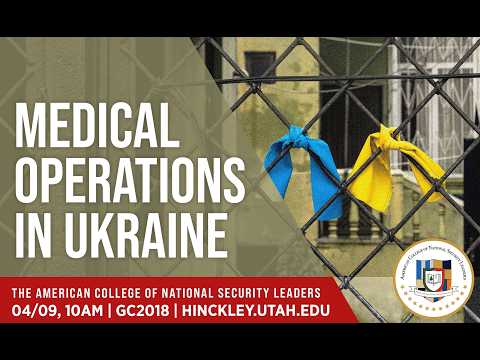
SALT LAKE CITY — Senior military and civilian trauma surgeons at a Hinckley Institute forum urged U.S. military and medical leaders to treat battlefield medicine in Ukraine as a policy and training priority, arguing that drones, mass-casualty numbers and targeted medical facilities have created prolonged-care challenges not seen in recent U.S. wars.
Lieutenant General Ronald Ray Blank, who moderated the panel, introduced the discussion by asking how two decades of U.S. combat medical advances compare with the demands of the Ukraine conflict. "How do drones, vintage weapons, novel weapons require a shift in our approach to medical care?" he asked.
Dr. Jeremy Cannon, professor of surgery at the University of Pennsylvania and a retired U.S. Air Force colonel, said the contrast is stark. He told the audience that improvements developed during the Iraq and Afghanistan campaigns — rapid evacuation, tourniquet use and forward blood resupply — produced "battlefield medical supremacy" in those theaters. In Ukraine, he said, casualty numbers resemble World War II levels, evacuation is…
Already have an account? Log in
Subscribe to keep reading
Unlock the rest of this article — and every article on Citizen Portal.
- Unlimited articles
- AI-powered breakdowns of topics, speakers, decisions, and budgets
- Instant alerts when your location has a new meeting
- Follow topics and more locations
- 1,000 AI Insights / month, plus AI Chat