Get Full Government Meeting Transcripts, Videos, & Alerts Forever!
Get email alerts on the English Learners topic
No spam. Unsubscribe anytime.
District explains Title III supports for English learners and changes affecting reclassification
Summary
Les O'Hara, director for multilingual programs, described Title III uses — educational assistants for newcomers, program specialists, teacher coaching and Hazel Health telemedicine — and explained that reclassification rules changed for special-education students, affecting recent rates.
Les O'Hara, director for multilingual programs (elementary), presented the district's Title III strategy and services to the advisory council, saying Title III funding is aimed at helping English learners attain proficiency and meet state academic standards.
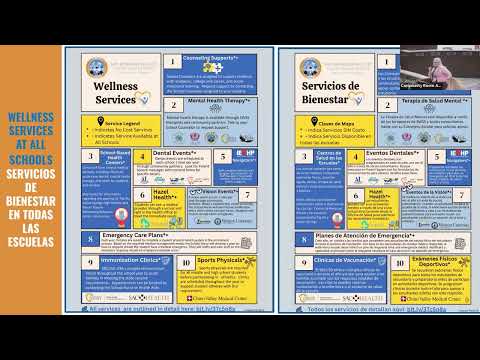
O'Hara described how Title III immigrant and LEP allocations fund educational assistant threes who provide classroom support to newcomer students, program specialists who coach and model lessons for teachers, purchases of cross-cultural reading materials, and district partnerships for telemedicine, vision and dental services. He emphasized professional development for teachers to build effective strategies for English learners and said the bulk of Title III money is used to fund personnel that support instruction.
O'Hara said the district identifies highest-need schools from state reports and prioritizes clinics and services in those feeder patterns. He told the council the district had 15 schools listed among the state's top 200 highest-need schools, which informed clinic siting and resource allocation.
On reclassification, O'Hara reiterated that the district aims for a 10% reclassification target annually. He explained that a recent state rule change ended some IEP-based reclassification pathways for students with disabilities; as a result, those students must meet the same ELPAC scoring thresholds as other students (a score of 4), which contributed to a dip in the district's reclassification rate.
During Q&A, O'Hara explained Kagan strategies for classroom discourse and answered questions about the base population for reclassification percentages (districtwide English learners who took the ELPAC, about 10,000 students). He noted that Title III allocations vary yearly and supplement, rather than supplant, services provided to all students.
The presentation closed with an overview of monitoring expectations and a reminder that parents can review district performance on the California Department of Education website.