Get Full Government Meeting Transcripts, Videos, & Alerts Forever!
Get email alerts on the Battery Storage topic
No spam. Unsubscribe anytime.
Zoning board approves first local battery storage project after safety and noise assurances
Summary
Project attorneys said the 3695 Broadway battery energy storage system will use lithium-iron-phosphate batteries, include in-container fire suppression and 24/7 monitoring, and sit about 165 feet from the nearest property line; the board approved the site plan after questioning fire-department coordination and fence height.
The Zoning Board approved a site plan for a battery energy storage project at 3695 Broadway after project attorneys described safety systems, local coordination and noise testing.
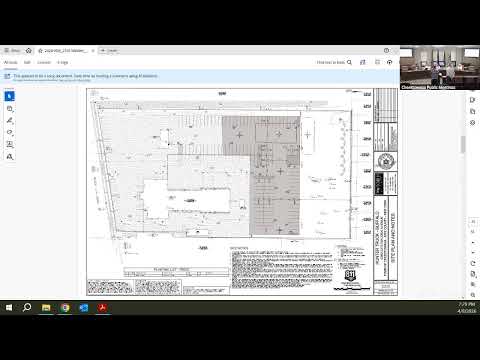
Peter Sorgi, project attorney with Hopkins Sorgi & McCarthy, told the board the property is 7.05 acres and the project will use a little over 2 acres. He said the site is a Superfund property and that the project represents “a very good reuse of the site” given limited alternative uses.
Kinshuk Sharma, representing AC Power, described multiple safety measures the company is specifying. “We are using lithium iron phosphate (LFP) batteries,” he said, and added the submission includes a national fire consultant'019s report, in-container suppression systems, 24/7 monitoring and gas (CO2) detectors that can automatically notify the fire department.
Sharma said the company had met with local fire-safety officials and will provide training and equipment as needed. The applicants also told the board they had conducted a noise study and that modeled noise is “well below the 50 decibels that'019s mandated by state code.” They said the nearest battery unit is about 165 feet from the property line.
Board members asked about fence height and barbed wire after planner comments flagged the proposed top-of-fence detail; the applicants said they would comply with code and the National Electric Code, which requires a minimum 7-foot fence, and were willing to remove barbed wire if the board preferred.
A board member moved to approve the site plan; the motion was seconded and passed by voice vote.
Because the project is a new technology for the board'019s review, applicants emphasized ongoing coordination with town staff and the fire department during construction and pre-commissioning training for first responders. The applicants also said they had reduced the original project footprint during review and pushed battery arrays further back on the site to address neighbor concerns.
Next steps remain administrative: the applicants must deliver the revised construction-level plans and any conditions required by staff before building permits are issued.