Get Full Government Meeting Transcripts, Videos, & Alerts Forever!
Get email alerts on the ARPA Closeout topic
No spam. Unsubscribe anytime.
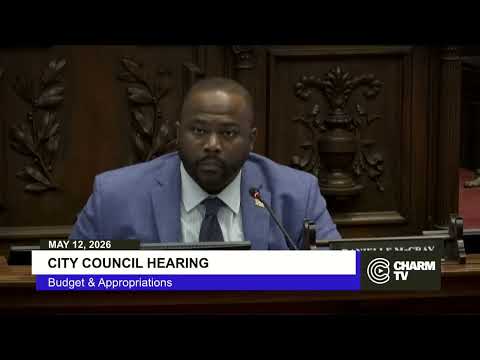
ARPA closeout on track but council presses recovery office on nonprofit accountability
Summary
Mayor’s Office of Recovery Programs reported $641.1M in obligated ARPA funds and $574.0M (89.5%) spent as of March 31, 2026, with staff saying they aim to obligate and spend all ARPA dollars by the Dec. 31, 2026 Treasury deadline; council members pressed for more granular nonprofit spending detail and asked who would be liable if Treasury sought repayment for misspent funds.
Deputy City Administrator Shamaya Kearney and Lauren Jackson, deputy director of the Mayor’s Office of Recovery Programs, told the committee the city has obligated $641,100,000 in ARPA funds and spent $574,000,000 (89.5%) as of March 31, 2026, and that the office is on track to spend all ARPA funds by the U.S. Treasury’s December 31, 2026 expenditure deadline.
Jackson said the Recovery Office is performing project‑level reviews, using approved reallocation processes where allowable, and providing technical assistance to agencies to close out grants; she reported 89 grants closed so far (18 interagency, 19 quasi‑agency grants, and 52 nonprofit grants). She also said the office will publish evaluation and impact reports (work by the University of Baltimore) that analyze several ARPA initiatives, including program demographics and qualitative participant surveys.
Council members requested more detailed financial information for some nonprofit grantees (examples raised: Baltimore Civic Fund, artist/performer payments at Artscape and other city events, and alleged mismanagement in the Clean Core program). Jackson and Kearney said high‑level totals and impact evaluations are available and that more granular contractual details may be subject to proprietary or legal limitations; they noted Inspector General reports and prior correspondence as additional sources. Recovery staff warned the council that, as the federal grantee, Baltimore City would be responsible to the Treasury for any required repayment if the Treasury ultimately determines that funds were misused or ineligible — a liability the administration said it seeks to avoid through closeout and, where appropriate, recovery or litigation against subrecipients or intermediaries.
Council members pressed the Recovery Office on whether the Baltimore Civic Fund had pursued recovery from a grantee tied to the Clean Core program; Recovery staff said the Civic Fund had determined it did not have recoverable assets, and the city would face exposure if Treasury required repayment. Recovery staff said the city would pursue remedies for agreements where privity of contract exists and would report findings in the final Treasury submission if adjustments are needed.
The Recovery Office also highlighted several ARPA‑funded efforts on track to spend funds (Downtown Partnership assistance to 32 small businesses, Visit Baltimore event and convention incentives, and university evaluation work), and said six evaluation reports covering five ARPA initiatives would be released shortly. Committee members asked for copies of evaluation reports and requested follow‑up on outstanding financial detail for certain grants.