Get Full Government Meeting Transcripts, Videos, & Alerts Forever!
Get email alerts on the Water Infrastructure topic
No spam. Unsubscribe anytime.
Tribal leaders say right‑of‑way deal clears way for Corrales siphon work; BIA review delayed progress
Summary
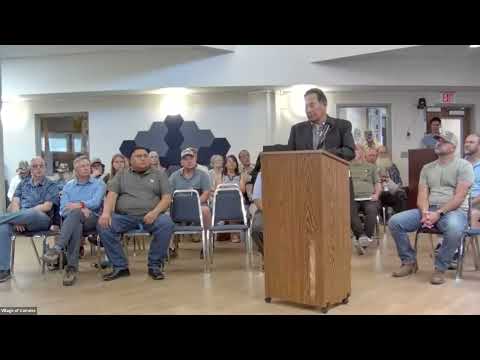
Governor Felix Chavis told the Corrales Village Council that tribal leaders and the Middle Rio Grande Conservancy District have reached a term sheet to replace a failing siphon, and that coordination with the Bureau of Indian Affairs (BIA) is allowing limited pre‑construction while a formal right‑of‑way is finalized.
Governor Felix Chavis, representing the Pueblo Bureau of Land Office (PBLO), told the Corrales Village Council that tribal leaders and the Middle Rio Grande Conservancy District (MRGCD) have reached agreement on key terms for a replacement siphon after lengthy review by federal officials.
Chavis said the PBLO pushed the process forward once the Bureau of Indian Affairs could not verify an historic right‑of‑way, and that the BIA’s nine‑month review revealed the district had been operating on trust lands without clear legal authorization. "It never occurred to us to withhold cooperation or stall the siphon replacement for any reason," Chavis said, adding the tribe insisted on a process that preserved sovereign and legal interests while allowing work to advance.
The governor described ongoing coordination with MRGCD’s engineering team, the district’s construction contractors and the BIA to permit preliminary construction activities — test borings, materials staging and site access on the tribal side of the river — while the final written agreement is completed. He asked the village to keep lines of communication open and noted the tribe had sought help from members of New Mexico’s congressional delegation when BIA progress lagged.
Councilors pressed for environmental and cultural safeguards. Councilor Murray asked whether assessments and protections are in place to prevent damage to potential artifacts; Chavis replied that assessments have been completed and that the tribe had identified measures to protect both artifacts and environmental resources. "We are assured that we're ready to move forward with it," he said.
Councilors also asked whether federal funding uncertainties could affect the project timetable. Chavis said the tribe had offered to write a letter supporting an extension of existing funding if MRGCD requests it, but that the district ultimately controls the funding timeline. He said the PBLO has been willing to allow certain pre‑construction work while the formal right‑of‑way agreement is finalized.
Next steps identified at the meeting included continued coordination between PBLO, MRGCD and the BIA, follow‑up by MRGCD’s legal counsel on the BIA review desk contact Chavis referenced, and continued council‑tribal communications to monitor progress.
The council took no formal action at the presentation; it concluded with council members thanking the tribe’s delegation for the update and with an offer to maintain communications as the agreement progresses.