Get Full Government Meeting Transcripts, Videos, & Alerts Forever!
Get email alerts on the Higher Education Budget topic
No spam. Unsubscribe anytime.
SUNY Ulster president outlines enrollment growth, reduced tuition increase and staffing needs in 2025–26 budget presentation
Summary
SUNY Ulster President Allison Buckley told the Ulster County Legislature that enrollment is up, the college plans to hire 13 new positions (including five full‑time faculty), and the college trimmed a proposed tuition increase to about $200 per year; she reported a projected operating deficit and described new programs including a textbooks 'Ustack' fee and SNAP implementation.
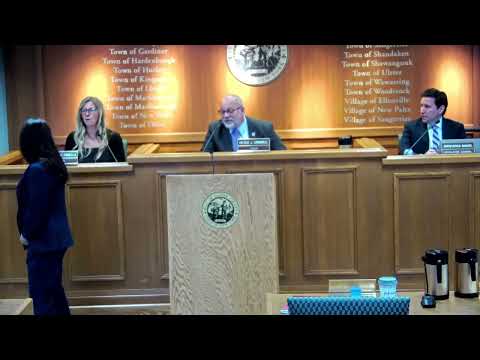
Allison Buckley, identified in the meeting as president of SUNY Ulster, presented the college’s tentative 2025–26 budget to the Ulster County Legislature on May 20. Buckley said fall enrollment had increased (reported as roughly 6.3% year‑over‑year) and that the college planned to budget 1,667 FTE (up from 1,547), add 13 positions including five full‑time faculty, and implement changes driven by the state’s reconnect plan (free tuition for certain adult learners).
Buckley said the college reduced a previously proposed tuition increase to roughly $200 per year (compared with an earlier figure of $328 presented at Ways & Means) and reported projected operating revenues of about $26 million and a projected shortfall of approximately $487,000 for the coming fiscal year. She detailed programmatic revenue changes (textbook program "Ustack" fees reported at about $28/credit option, revenue components from enrollment and modest price increases) and noted a pull of some salaries into restricted budget lines tied to state grants. Buckley also said SUNY Ulster intends to implement SNAP‑related operating funds to expand services.
Board Chair Debbie Briggs later spoke during the public‑hearing portion, praising the college’s nursing program outcomes and supporting the Legislature’s continued investment in the institution. No formal vote on the college budget occurred at the meeting; the presentation served as the official public‑hearing presentation and will be followed by committee review.
Why it matters: The presentation flagged growth and recruitment needs, a modest tuition‑increase rollback relative to earlier proposals, and strategies to scale workforce and student supports as statewide policies (the governor’s reconnect plan) increase demand.
Next steps: The college will continue committee presentations; legislators indicated they will refer details to funding committees.