Get Full Government Meeting Transcripts, Videos, & Alerts Forever!
Get email alerts on the Landfill Site Opposition topic
No spam. Unsubscribe anytime.
Hundreds of residents oppose proposed Worsing/Brown Road landfill, warn of watershed and health risks
Summary
Dozens of residents, farmers and indigenous leaders told the Ulster County Legislature on May 20 that proposed landfill sites in Worsing/Brown Road and Milk Road threaten well water, the Rondout watershed and a locally vital farming economy; speakers urged alternatives such as diversion, composting and regional planning.
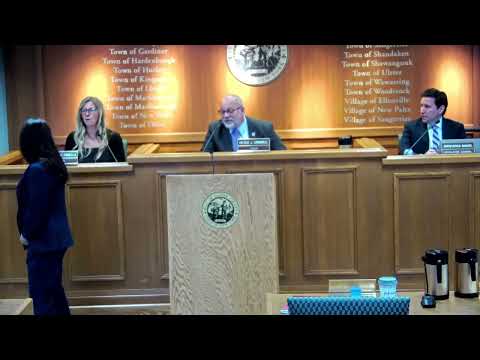
Dozens of residents, farmers and indigenous leaders packed the Ulster County Legislature’s public comment period on May 20 to oppose proposed landfill sites near Worsing and Brown Road in the town of Ellenville and at Milk Road, saying the proposals risk contaminating well water, damaging the watershed and harming local farms.
The speakers, who came from Brown Road, Ellenville and surrounding communities, described the sites as near reservoirs, wetlands and fragile mountain waterways that feed the Rondout watershed and argued that long‑term contamination risks outweigh short‑term budgetary conveniences. “We have been on this land my whole life … you do not have our permission to pollute our land and harm our health,” said Anna Mott, who identified herself as a Brown Road resident and homeschooling parent.
Multiple speakers described nearby private wells and small farms that supply local markets and said a landfill would imperil drinking water and farm viability. Kira Rogowski, who identified herself as a homeowner on Brown Road, said her son’s respiratory illness improved after moving here and warned that methane, airborne particulates and groundwater contaminants from landfills could reverse that progress. “We don’t need another landfill. We need leadership,” she said.
Local elected and civic leaders also framed the objections in legal and planning terms. Johnny Frost, identifying himself as a town board member and former state senator, cited the Climate Leadership and Community Protection Act and the State constitutional amendment recognizing a right to clean air and water, arguing that siting a large landfill near protected freshwater wetlands and flood‑vulnerable areas would conflict with those commitments. Ruben Bashard and other speakers raised procedural concerns about oversight of the county waste authority and whether an absence of a current contract could reduce the county’s leverage over bonding caps and siting decisions.
Speakers urged alternatives including expanded composting and organics diversion, regional shared facilities that avoid siting impacts on one community, and investments in waste‑reduction infrastructure. Several referenced successful programs in other states and urged the county to pilot diversion and reuse strategies instead of creating new landfill capacity.
The public comment segment produced no formal decision; it was recorded as part of the Legislature’s public‑comment period and will inform future committee and county‑level steps. Several commenters invited legislators to visit affected properties in spring and summer and to consult with local farms and watershed managers before moving forward. The Legislature did not vote on any landfill proposals during the May 20 meeting.
Why it matters: The proposed sites touch multiple policy areas — local land use, state environmental permitting, watershed protection that affects downstream users and regional waste management economics. Residents argued the county’s choices could lock in infrastructure with multi‑decade consequences for water and farmland.
What’s next: Commenters urged the Legislature to require rigorous environmental analysis, strengthen oversight of the county waste authority and explore regional waste‑diversion options before any permit or funding decisions are finalized. The Legislature’s next regular meeting is scheduled for June 17, 2025.
Sources: Public comments recorded during the Ulster County Legislature meeting, May 20, 2025; speakers cited above.