Get Full Government Meeting Transcripts, Videos, & Alerts Forever!
Get email alerts on the Zoning Appeal topic
No spam. Unsubscribe anytime.
Albany board tables appeal by Seal Works over zoning designation, asks for traffic, spill and containment details
Summary
The board tabled an appeal from Seal Works Albany (10 North Ferry Street) challenging a planning determination that the proposed sealcoating/blending/distribution facility is 'heavy manufacturing.' The applicant argued the process is an enclosed blending operation akin to light manufacturing; the board requested traffic analysis, spill-containment plans, and clarification about outdoor storage and flood-overlay risks.
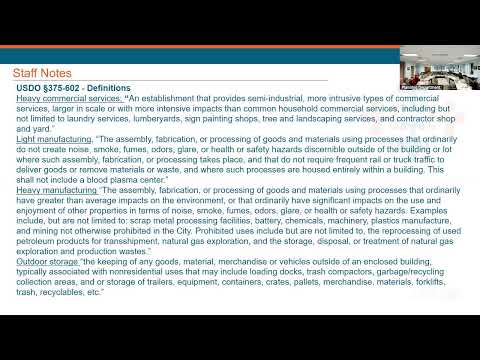
Attorney William Demeris, representing the applicant for 10 North Ferry Street (Seal Works Albany), asked the Board of Zoning Appeals on March 11, 2026 to reconsider a planning determination that the proposed seal-coating blending and distribution facility should be classified as "heavy manufacturing." Demeris told the board the proposed operation uses enclosed vertical mixers, stores the blended product indoors, involves limited truck deliveries, and does not perform hot-mix asphalt processing or combustion; therefore, the applicant believes the use fits light manufacturing or heavy commercial services under section 375-602 of the local code.
Board members and planning staff probed several operational details the record did not yet provide: the number and routing of large trucks, whether outdoor silos or tanks are proposed near a Hudson River flood overlay, how the facility would manage spills and secondary containment, sidewalk and pedestrian impacts in a "walkable center," and whether the site lies close to residential or public-access areas. Staff and members asked for documentation from other municipalities where similar operations are classified as light manufacturing, and for traffic and environmental analysis where appropriate.
Demeris described a typical operational profile: two to three raw-material deliveries per week (18-wheelers) and two to three outbound 18-wheeler shipments per day during peak season, plus a handful of customer pickups. He emphasized the mixing and storage would be indoor and that the process does not require DEC air permits. Board members asked Demeris to provide evidence (traffic projections, spill-containment plans, examples of zoning determinations elsewhere) and suggested coordination with engineering and public-works staff on road impacts.
The board voted to table the appeal so staff and the applicant could assemble the requested materials and to allow placement on a future agenda once the file is complete. The board identified a list of follow-up items it expects to see, including a simpler operational description for the record, spill/containment plans, precise truck-routing information, and any documentation supporting the requested use classification.