Get Full Government Meeting Transcripts, Videos, & Alerts Forever!
Get email alerts on the Road Safety topic
No spam. Unsubscribe anytime.
Grand Island resident urges state to study roundabout after a child’s death
Summary
A Grand Island resident told the town’s traffic advisory board that a pedestrian killed at Broadway and the parkway could have been saved by a roundabout; the board agreed to review materials and table a formal endorsement until it sees the county resolution and additional studies.
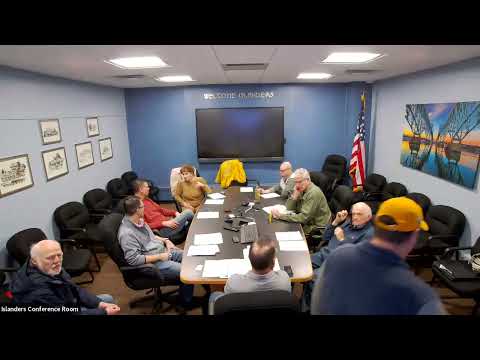
Bill Daniels, a Grand Island resident, told the Traffic Advisory Board on Sept. 11 that his granddaughter was struck while crossing near Broadway and the parkway and did not survive. "She was crossing the street and uh didn't make it," Daniels said, describing a fatal pedestrian collision his family says was worsened by road layout and inconsistent solar-powered lighting.
Daniels handed the board copies of an engineering memo prepared by Jim Jones, P.E., and said an online petition asking for safety changes at the intersection had gathered 2,434 signatures. He summarized the memo's recommendations — reducing lane counts, adding multiuse sidepaths, lowering speeds to 30 mph or 25 mph, and installing roundabouts — and said the measures would reduce maintenance costs and improve safety for pedestrians and motorists.
Board members and residents questioned differences between mini and full roundabouts and noted operational limits. "The mini roundabout is called a calming device and it is designed to slow you down," a resident explained during the discussion, arguing the design reduces severe intersection conflicts. Participants also said the New York State Department of Transportation's earlier study did not examine the full corridor or seasonal high‑volume periods (for example, park visitation in summer), and therefore might undercount peak traffic at the site.
Attendees noted a county resolution from March 27 backing further study; board members said they had not yet seen the county document and asked Daniels to provide a copy for distribution. Officials also discussed funding pathways, including federal programs that can cover 60–80 percent of construction costs, but emphasized that any work on parkway property requires state or park authority approval.
After hearing testimony and debate about benefits, plow and emergency‑vehicle access, and examples from nearby towns, the advisory board voted to table formal action on endorsing a roundabout until members can review the county resolution and additional materials Daniels promised to provide. As an advisory body, members said their next step would be to prepare any suggested wording or a resolution for the town board to consider and to coordinate with county and state agencies.
The board also discussed timing the request with a potential future paving project so a redesign could be incorporated into a larger reconstruction contract. The advisory board did not adopt a formal endorsement at the meeting.