Get Full Government Meeting Transcripts, Videos, & Alerts Forever!
Get email alerts on the Economic Development topic
No spam. Unsubscribe anytime.
North Ogden tables proposal to use sales‑tax increment to offset impact fees
Summary
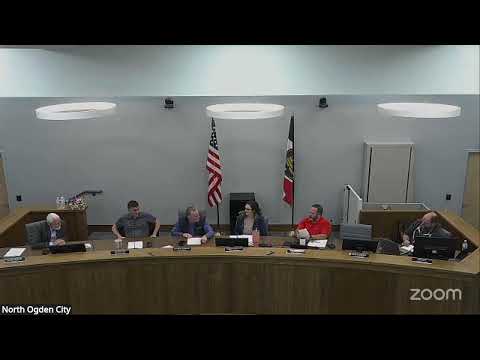
After extended debate about caps, confidentiality of state sales‑tax reports, and how reimbursements would be calculated, the council voted to table a staff proposal to use sales‑tax increment as an incentive for new or expanding businesses. Staff will return with concrete examples and computations.
City staff presented a draft policy (Resolution 13‑2025 as transcribed) proposing that North Ogden could use a portion of sales‑tax increment to provide impact‑fee credits to new or expanding businesses. John Call summarized options discussed in prior meetings and several council members pressed for concrete examples, thresholds and guardrails to limit fiscal exposure.
Call described two core choices: (1) offer a share of the city’s local point‑of‑sale increment (for example up to 50%) to be returned to qualifying businesses, or (2) cap total reimbursement at 100% of assessed impact fees while still limiting the percent of sales‑tax increment used. "One thing that is helpful to understand is commercial development does not pay park impact fees," Call said, and he recommended clarifying which impact fees would qualify.
Council members discussed confidentiality of state sales‑tax reports, the mechanics of reimbursing developers after verification, whether to require the developer to provide the last 12 months of tax submissions, and whether any program should be retroactive to pending projects (MoBetta's was mentioned as a current example). Some council members urged more aggressive incentives to attract commercial development; others asked for a sliding scale with thresholds tied to projected revenue. Several members recommended using a concrete example with a pending developer before adopting a broad policy.
After discussion, Council member Severing moved to table the resolution until staff provides a concrete example and recommended schedule; the motion was seconded and carried. John Call and staff will return with computations and a proposed effective date in the near term (targeting January or February). The council also left the option of a special meeting if an urgent opportunity arises.