Get Full Government Meeting Transcripts, Videos, & Alerts Forever!
Get email alerts on the Land Development Code topic
No spam. Unsubscribe anytime.
Putnam planning panel backs easing land-use rule for family subdivisions, sends recommendation to county commissioners
Summary
The Putnam County Planning Commission voted to recommend removing the agricultural future‑land‑use designation requirement for type‑three family subdivisions in the county Land Development Code, forwarding staff’s edited draft — including changes to a five‑year resale restriction and an easement‑variance cross‑reference — to the Board of County Commissioners.
The Putnam County Planning Commission voted to recommend that the Board of County Commissioners consider removing the agricultural future‑land‑use designation requirement from the county Land Development Code provision for “type three” family subdivisions and forwarded staff’s edited text amendment with additional clarifying edits.
Ethan Thompson, a planner with county staff, presented application LDC26‑0000001 on behalf of applicant Zachary Ford and said the proposal would allow parcels zoned agricultural but located outside the agricultural future‑land‑use category to qualify for the family subdivision process while keeping the agricultural zoning requirement and the one‑acre minimum lot size in place. Thompson also outlined a staff insertion that would reference the administrative‑variance process for reducing the 66‑foot minimum easement width.
Commissioners focused discussion on three main concerns: whether loosening the future‑land‑use requirement would conflict with the county comprehensive plan, whether the change would create a loophole allowing investors to create multiple buildable lots without required roads and utilities, and how a five‑year prohibition on resale should apply to developed versus vacant parcels. Commissioner Williams raised the comp‑plan conformity question and said he would have preferred a comprehensive‑plan amendment or rezoning process in parallel; other commissioners countered that the comprehensive plan delegates subdivision specifics to the Land Development Code.
On the resale rule, the commission agreed to remove the clause “if the parcel remains vacant” from section 8 of §45‑1036 and to delete the sentence that would have explicitly allowed sale of a parcel as soon as a single‑family home received a certificate of occupancy. Thompson told the commission staff would present three alternatives to the Board of County Commissioners: the applicant’s original redline, the staff version, and the planning commission’s edited version.
Several commissioners expressed concern about potential abuse, noting that the family subdivision is processed administratively and, for some parcels, could create multiple one‑acre lots without platting requirements that trigger road‑paving and other infrastructure obligations. Thompson responded that the code still requires agricultural zoning for type‑three lots and that the application process requires a notarized affidavit naming recipient family members and their relationships; he also recounted that a prior 10‑year ownership requirement was shortened in 2024 and that the current five‑year sunset aims to broaden eligibility for newer property owners.
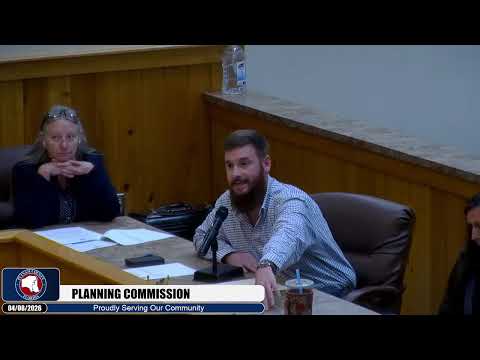
Applicant Zachary Ford, who identified himself at the hearing, said his aim is to "build with my family" and asked the commission not to make the process more burdensome.
A motion to approve staff’s version of the amendment with the commission’s edits carried on a voice vote; one commissioner recorded an opposition on process grounds. The commission’s positive recommendation will move to the Board of County Commissioners for final action at its May 26, 2026 meeting.
The planning commission also approved minutes from prior meetings and adjourned at 5:29 p.m.