Get email alerts on the Parks Budget And Operations topic
No spam. Unsubscribe anytime.
Parks trustees review FY27 draft budget, grooming contracts and fire‑mitigation needs
Summary
At an April 9 work session, trustees reviewed the parks draft FY27 budget (proposed $619,555.12 for the mountain), debated grooming-contract funding and accountability for Biathlon and county trails, and directed staff to research fire-mitigation water options, security cameras, and bring historic grooming hours to a scheduled April 24 work session.
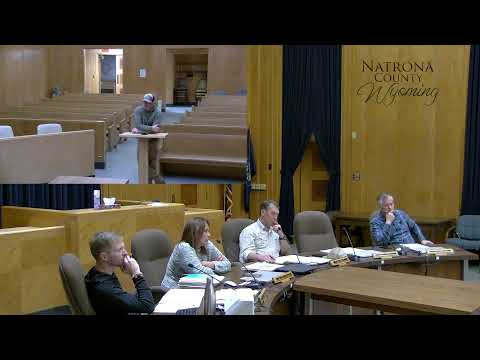
Trustees spent the bulk of their April 9 meeting reviewing a draft FY27 parks budget, discussing contract grooming for Nordic and multi-use trails, capital carryovers, and fire‑mitigation planning.
Michael Brown, park director staff, presented the draft narrative and spreadsheets the board will forward to the county clerk. He said the mountain budget (department 56) is proposed at $619,555.12, a 2.55% decrease from last year, and described a 60/40 staffing split between the lake and the mountain. The county requested narratives explaining requested changes and prioritized capital projects for the upcoming fiscal year.
Trustees pressed staff for more quantitative backing on several items before finalizing numbers. On grooming, trustees said historical billing and hour logs are needed to evaluate increasing the Biathlon grooming contract (historically $20,000–$30,000) and a new $10,000 request for Central Wyoming Trails Alliance (split for winter and summer work). Staff reported the county logged roughly 200–300 grooming hours a season; at current rates $10,000 would cover about 67 hours. Trustees asked staff to produce the logs and reconcile hour-meter data before approving larger contract increases.
On capital carryovers, staff asked to set aside $40,000 of one-cent funds as a local match for the shelter grant and noted outhouse replacement costs: a recent single-stall installation at Hell’s Halfacre cost $67,000 (delivered/installed) and a double-stall is estimated near $100,000. Trustees agreed to carry these items forward for consideration.
Trustees also flagged vandalism at remote sites (shot doors, damaged fee boxes, carved rails) and discussed security-camera options that use cellular or solar-enabled game cams with cloud storage; members noted monitoring burdens for limited staff and directed staff to pursue grant options and pricing models.
Fire-mitigation and water supply for remote park sites drew sustained attention. Trustees discussed short‑term options such as portable tanks and longer-term evaluation of potable wells or hydrants; staff noted that groundwater production will determine feasibility and that earlier hydrologic work exists in staff files to review. Trustees asked staff to include an evaluation line in the budget and to consult regional resources (Region 8/EPA guidance) before committing to capital work.
Direct follow-ups: staff will gather grooming-hour logs and billing reconciliation, update revenue and reserve figures for the lake budget, provide additional contractor estimates for the drain-line and walking-bridge work, and prepare materials for a budget work session scheduled for April 24 at 11:00 a.m. The trustees did not adopt final budget figures and will finalize requests after the work session.
AI generated
The text on this page is AI generated. Summaries, highlights, analysis, and video transcripts are all produced from the original source material.
AI can make mistakes, so if you spot one, and we will fix it for everyone.
Note: the source content is unaltered by us. Any content source we link to, be it a video, an audio recording, or a document, is presented exactly as its publisher released it. That publisher is usually a government body, sometimes an individual official or another organisation.