Get Full Government Meeting Transcripts, Videos, & Alerts Forever!
Get email alerts on the State Legislation topic
No spam. Unsubscribe anytime.
Chamber Alliance brief: 2026 legislative changes reshape TIF and levy rules, cities must analyze impact
Summary
Dustin Miller of the Iowa Chamber Alliance told the council the final legislative package trimmed some of the more restrictive proposals (bonding and reserve caps) but changed TIF rules and LMI formulas; he urged cities to analyze new definitions of new valuation and possible effects on development incentives.
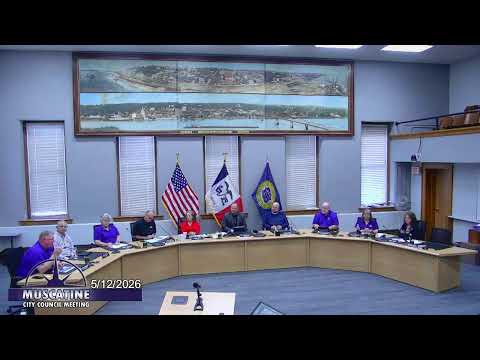
Dustin Miller, executive director of the Iowa Chamber Alliance, told the Muscatine City Council on May 12 that the 2026 legislative session produced a mixed set of outcomes for cities — some potentially harmful proposals were removed, but the session also produced reforms that will require careful local analysis.
Miller said early proposals from both the governor and the House would have been far more restrictive, including proposals that would have limited use of bonding and placed hard caps on multiple levies. He credited advocacy by cities, chambers and assessors with removing several of the most damaging provisions, including a proposal that would have required general‑operations bonding to go to a vote and a proposed 10% reserve cap that would have been inconsistent with local government finance practices; final language aligned closer to higher recommended reserve levels, reducing the risk of bond‑rating impacts.
On tax‑increment financing, Miller said the initial governor’s draft would have removed perpetual TIFs and limited captured increment to public‑infrastructure uses, which would have eliminated tools used for economic incentives. He said subsequent negotiations preserved reform rather than prohibition, but that new statutory language and new definitions (notably around “new valuation” and the treatment of abatements and rolling‑off TIFs) will require local analysis to understand how projects and abatements are treated under the new law.
Miller also said the session changed local option revenue possibilities: measures such as a proposed increase in the local option sales tax did not advance amid political resistance to tax increases in an election year. He suggested that revenue‑sharing approaches could be explored to make local option tax increases more attractive.
He warned the council that the changes are complex and that cities will need to work with state officials and associations to interpret the mechanics. Miller encouraged Muscatine staff to work with the Iowa Chamber Alliance and League of Cities as they model local impacts.
Council members thanked Miller and said the summary and analyses were helpful; no formal action followed the presentation.