Get Full Government Meeting Transcripts, Videos, & Alerts Forever!
Get email alerts on the Data Centers topic
No spam. Unsubscribe anytime.
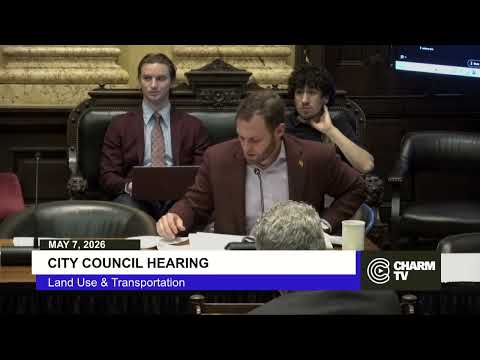
Baltimore committee advances one-year moratorium on data centers, adds study and protections
Summary
The Land Use and Transportation Committee voted to report favorably a one-year moratorium on new large-scale data centers, adopting five sponsor amendments that require a nine-month study, set a 10-megawatt primary-use threshold, and include a one-year sunset and a 30-day implementation delay.
The Land Use and Transportation Committee on Thursday voted to report favorably a bill that would impose a one-year moratorium on new data centers in Baltimore, sending the measure to the full City Council with five sponsor amendments.
Council President Zieg Cohen, the bill’s sponsor, told the committee the moratorium would give the city time to study environmental, fiscal and equity impacts and to develop conditional-use standards. "Baltimore deserves this moratorium," Cohen said, arguing that while much of the profit from data centers is privatized, the costs — higher utility bills, infrastructure strain, noise and water use — too often fall on residents.
The committee adopted five sponsor amendments. They clarify that data centers cannot be categorized as office, telecommunications or research-and-development uses; define a data center as a facility where computing and data transmission is the primary use; require a coordinated study by city agencies and stakeholders due nine months after enactment; sunset the moratorium after one year; and delay implementation by 30 days at the Department of Housing and Community Development’s request to allow agencies time to prepare enforcement and permitting procedures.
Supporters at the hearing, including community groups and environmental organizations, urged a strong, study-backed pause. Amy Petcosic, executive director of the Community Law Center, said the organization supported a one-year moratorium and the study, and asked the council not to raise the 10-megawatt threshold. "The lessons learned elsewhere make sense for Baltimore City," Petcosic said.
Business and development groups urged caution about the 10-megawatt cutoff. Tom Welling of the Baltimore Development Corporation recommended aligning the city threshold with the state’s 25-megawatt large-load standard to avoid unintentionally sweeping in hospitals, research institutions or other non–data-center facilities. "We want to make sure the Baltimore region stays competitive," Welling said.
Agency witnesses described practical enforcement and measurement concerns. Justin Williams, interim executive director of the Board of Municipal and Zoning Appeals, noted plan reviewers may not be able to determine a building’s megawatt capacity from typical permit materials and suggested substation-based signals could be easier to verify. Jeff Hochstetler of the city solicitor’s office said the law department could approve the bill for legal sufficiency but recommended clearer exclusion language to avoid drafting ambiguities.
Committee members discussed timing and scope. Councilman Zach Blanchard questioned whether nine months for the study plus a 12-month moratorium would leave sufficient time to draft and enact implementing legislation; Cohen said the council intends robust community engagement during the study and believes the schedule provides adequate time to act. Several speakers urged that applications not be processed during the moratorium; the planning commission recommended continuing administrative review of proposals but withholding building permits until after the moratorium.
On a procedural motion, Chair Ryan Dorsey moved to report the bill favorable with the adopted amendments. The committee took roll call and recorded five affirmative votes; the bill will now proceed to the full City Council.
Next steps: the study is due nine months after the ordinance would take effect, agencies will have a 30-day window to prepare enforcement protocols, and the moratorium will automatically sunset one year after enactment unless the council acts further.