Get Full Government Meeting Transcripts, Videos, & Alerts Forever!
Get email alerts on the Inflation Reduction Act Tax Credits topic
No spam. Unsubscribe anytime.
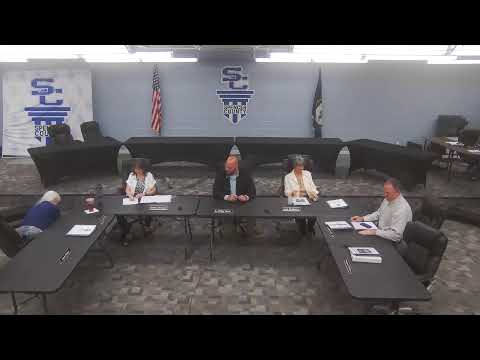
Concord pitches up to $2.3M in clean‑energy tax credits to Spencer County Schools; board asks for more information
Summary
At a Spencer County Schools work session, Concord's Jonathan Darnell told the board the district could recover up to $2.3 million in federal clean‑energy tax credits for geothermal and mechanical work but must act quickly to meet IRS filing and compliance windows; the board asked for more information and took no vote.
Jonathan Darnell, business‑development lead at Concord, told the Spencer County Schools board during a work session that the district could recover as much as $2,300,000 in federal investment tax credits tied to recent geothermal and mechanical projects if the district can document compliance with prevailing‑wage and apprenticeship rules required under the Inflation Reduction Act. "Spencer County Schools has an opportunity to recover up to 2,300,000 in cash from these projects," Darnell said, and warned the compliance window is time‑sensitive.
Darnell described a three‑phase approach Concord would manage: (1) a cleanup audit of on‑site payroll and subcontractor records to establish who worked on each task, (2) remediation of any gaps discovered (back pay or cure payments where necessary), and (3) preparing IRS preregistration and the abbreviated filing for tax‑exempt entities. "The sooner you start, the smaller that restitution and CURE process is gonna be, and, ultimately, the faster you're gonna get the captions in," he said.
The consultant said the credit structure is layered: a 6% base credit, with adders for prevailing‑wage and apprenticeship compliance and other bonuses that together can approach 30% of eligible mechanical costs. Darnell said the elementary‑school mechanical basis identified so far is roughly "6,400,000 or roughly 6.5" million and said Concord estimates the district could recover up to $2.3 million across projects if all compliance ladders are met. He also cautioned that if the prevailing‑wage/apprenticeship requirements are not met, the recoverable credit could fall to 2%.
Board members pressed Concord for details about costs and risk. Darnell cited a pricing structure in the transcript as "Per site is $42.50 upfront" and later described a managed‑service and per‑active‑week billing that, depending on construction duration, could result in compliance‑management fees in the range Darnell framed as "80 to a 115,000" for a project timeline of about 26–36 weeks per site. Darnell also said Concord has not had a disallowance from the IRS across its recovery engagements and described a 100% success rate in his firm's prior work.
Superintendent Willie Foster and board members asked how any restitution or cure payments would be funded. Darnell said he could not advise on the district's fund accounting and that those costs would likely need to be borne by the district; he estimated back‑pay exposure would often be "a couple 100,000" or less but said amounts vary with the scale of gaps uncovered. Foster said the board would need to know whether restitution would come from the general fund or construction contingency before approving contracts.
Board members also sought clarification on filing windows and whether the district could group projects for IRS purposes to extend eligibility. Darnell said grouping was possible in some cases but that Concord would need to research the district's fiscal‑year designation and the precise timing of project placement in service to be sure.
No formal motion or vote was taken. Board members concluded they needed additional information — particularly on contract terms, the likely scale of any restitution exposure, and the precise fee schedule — and said they would continue the conversation in follow‑up meetings.
Provenance: Topic introduced at SEG 899 (Darnell) and continued through SEG 1544 (Darnell Q&A).