Get Full Government Meeting Transcripts, Videos, & Alerts Forever!
Get email alerts on the Environment topic
No spam. Unsubscribe anytime.
Council debates ban on second-generation anticoagulant rodenticides on city property; state bill resolution passes
Summary
Ordinance Committee advanced discussion of an ordinance to ban SGARs on city property and requested legal form and an implementation plan; council also unanimously adopted a resolution supporting state bills (S.2721/H.965) to restrict rodenticide use in the environment.
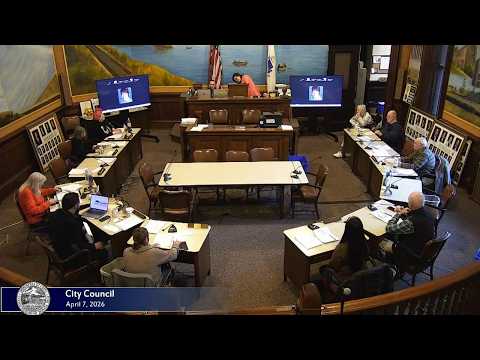
Holyoke councilors and the Ordinance Committee spent significant time on April 7 examining proposed limits on second-generation anticoagulant rodenticides (SGARs). Committee members described SGARs as persistent poisons that can harm wildlife and pets if predators ingest poisoned rodents, and they recommended tighter controls targeted at city-owned properties while noting state preemption limits for broader local authority.
Committee discussion emphasized balancing public health and wildlife protection with operational needs. The committee recommended an effective date of July 1 to give the Department of Public Works (maintenance division) and contracted pest-control vendors time to adopt alternative integrated pest-management practices, mechanical traps, sanitation improvements and written transition plans. Several councilors stressed the need for a written implementation plan and coordination with building and permitting staff (including the Building Department) before any ban takes effect.
At the same meeting the council adopted a resolution urging the Massachusetts General Court to take up companion bills (Senate Bill 2721 and House Bill 965) that would impose reporting requirements and guardrails for rodenticide use across the state.
No final local ordinance was adopted at the April 7 meeting; the ordinance was tabled or sent back to committee so legal staff can produce formal draft language and departments can prepare operational plans.