Get Full Government Meeting Transcripts, Videos, & Alerts Forever!
Get email alerts on the Snow Removal topic
No spam. Unsubscribe anytime.
Salem council pauses proposed snow‑removal fine changes and asks city for enforcement data
Summary
After a lengthy discussion and questioning of city staff, the Salem City Council’s ordinance committee voted to keep a mayoral proposal to amend snow‑removal fines in committee and requested data and broader departmental participation before moving forward.
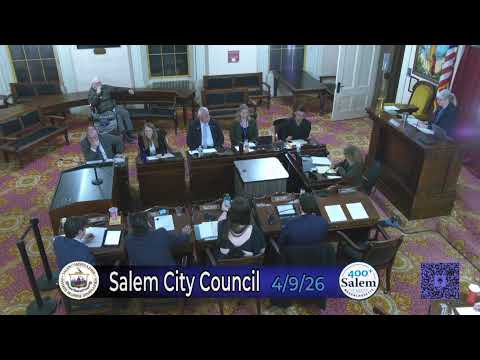
The Salem City Council’s Ordinance, License and Legal Affairs committee on April 9 paused action on a mayoral ordinance that would amend Chapter 38, sections 13 and 14, governing snow‑removal fines, and kept a separate review of snow‑removal best practices in committee while requesting more enforcement data and participation by inspectional services and the mayor’s office.
Councillor Halapa, a member of the committee, said the amendment presented by the mayor “is actually very similar to what’s currently in our municipal code” and asked whether the higher commercial rates approved last year were being enforced. “Were folks ticketed as that? Did it work? And are we getting more compliance?” she asked, adding that inspectional services had not provided ticketing figures.
Ray Joden, director of the Department of Public Services (DPS), told councilors the city maintains roughly 25 miles of sidewalks — about one‑quarter the mileage of its streets — and that the department brings eight pieces of sidewalk equipment to storms over an inch. He said contractor support for streets has fallen from contractor peaks (about 66 pieces in 2017) to the mid‑30s this winter, and the city supplements with rented equipment and seasonal staff.
“We’ve rented equipment to offset the lack of contractors,” Joden said, noting the city has tried brine systems and route‑optimization work but lacks consistent contractor availability. He also described existing spotters, call logs and after‑action reviews as the mechanisms the city uses to identify quality‑control issues.
Several councilors said the city had not made the case for raising fines without first showing whether previously approved increases were being enforced and whether they improved compliance. Councillor Sedoryak noted safety concerns for children forced to walk in travel lanes because of uncleared sidewalks, while Councillor King urged inspectional services to supply ticketing and enforcement practices before the council considers any change in fine levels.
With inspectional services unavailable at the meeting, Councillor Smith moved that the ordinance on fines remain in committee; the chair recorded the motion as carried. The committee made the same procedural decision on the separate order to discuss snow‑removal best practices and enforcement after a broad question‑and‑answer session with Joden in which council members pressed him on contractor recruitment, insurance, prioritization and potential city‑run post‑storm shoveling billed to property owners.
Council members asked the mayor’s office, inspectional services, parking enforcement and police to join the next session so the council can receive enforcement metrics, ticketing data, procurement/contract documentation and clarifications about which sidewalks the city maintains. Multiple councilors said they expected follow‑up reports and recommended the administration provide written performance metrics and any available ticketing records for the past two winters.
The committee’s action leaves the proposed fine changes and the best‑practices review open; councilors said they want data and wider departmental participation before any ordinance is advanced. The item remains in committee pending additional materials from inspectional services and the mayor’s office.