Get Full Government Meeting Transcripts, Videos, & Alerts Forever!
Get email alerts on the Economic Incentives topic
No spam. Unsubscribe anytime.
Brookfield committee reviews draft economic-incentive policy to standardize developer subsidies
Summary
Village staff presented a draft economic incentive policy on June 23 proposing a unified menu of developer tools — updated TIF language, a two-tier property improvement program, sales-tax rebates, property-tax rebates and grocery-store incentives — and asked the Committee of the Whole to review before returning July 14.
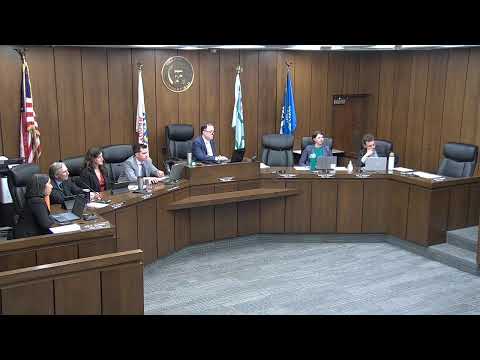
Libby Papovic, the village’s community development director, told the Village of Brookfield Committee of the Whole on June 23 that staff and the Economic Development Commission have drafted a comprehensive economic-incentive policy intended to "retain, expand and attract additional commercial and industrial businesses" and to apply incentives uniformly across pending development sites.
The draft would consolidate tools the village already uses — the 2010 tax-increment finance (TIF) policy, the 2021 property improvement program (PIP) and last year’s retail incubator initiative — and add a formal menu that includes sales-tax incentives, property-tax rebates, Cook County tax-abatement support, grocery-store incentives and customized development agreements (fee waivers, expedited permitting and public infrastructure investments). Papovic said the goal is to tie incentives to clear public benefits, improve transparency and include measurable accountability metrics.
On TIFs, staff proposed updating the 2010 policy to cover all TIF districts, offer pay-as-you-go reimbursements to developers from new tax revenue, cap reimbursements at 50% of eligible tax increment and limit incentive periods to 10 years. On the PIP, Papovic described a two-tier approach: a smaller tier for signage and awnings (reimbursing up to 50% of qualifying costs, maximum $2,000, with a required three-year commercial lease) and a larger facade/renovation tier (reimbursing up to 50% with a $20,000 maximum and a once-per-building/10-year limit).
Papovic said a proposed sales-tax rebate program would target businesses that already have operating sales revenue elsewhere and provide a predetermined rebate for a fixed period with a total cap and clawback provisions if performance commitments are not met; the staff recommendation includes a 50/50 split between village and developer as a starting point. For property-tax rebates, staff recommended five-year rebate terms for qualifying commercial or mixed-use projects (general thresholds cited by staff: ~$500,000 for commercial/mixed use and ~$1 million for industrial projects) and noted rebates would be limited to priority development areas and designed to retain or create full-time jobs.
Trustees asked detailed questions about eligibility and implementation: whether multiple storefronts under one owner could receive separate awards (Papovic said facade grants would cover the whole building, while signage grants could be awarded per tenant), whether owner-operators could satisfy the three-year lease requirement (Papovic said owners can create a lease to meet recordkeeping requirements), and whether the village portion of any property-tax rebate would be clarified so the village does not subsidize county or school taxes (staff agreed to clarify language).
On roles, staff described a two-step practice: village staff and the village manager would negotiate and recommend incentives to developers, but any final incentive agreement would be subject to board approval. The board directed staff to bring a revised draft back to the Committee of the Whole on July 14, 2025, with possible consideration for adoption at the July 28 meeting.
The draft remains a policy-level menu rather than a set of final applications or formats; staff told trustees additional details and application forms would be developed after the board confirms key policy choices.
Ending: The Committee shared broad support for a unified policy while requesting clarifications and extra time for review; the item returns to the committee July 14, 2025, with potential final action July 28.