Get Full Government Meeting Transcripts, Videos, & Alerts Forever!
Get email alerts on the Prevailing Wage topic
No spam. Unsubscribe anytime.
Senate panel backs centralized certified‑payroll portal but contractors raise data privacy concerns
Summary
Senate File 4745 would create a centralized electronic portal for certified payroll reporting on state‑funded projects to streamline recordkeeping and FOIA responses. Local governments and municipal groups supported the portal; contractors and trade associations warned about employee privacy, interoperability and implementation details. Committee adopted amendments and referred the bill to Finance.
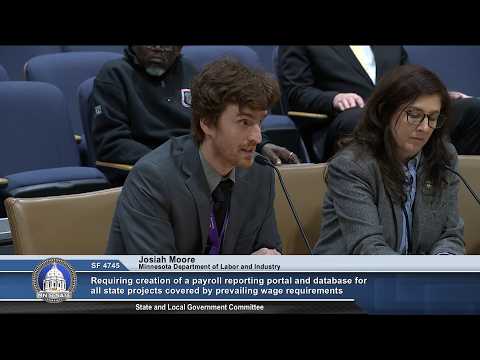
Senate File 4745, presented to the State & Local Government Committee on Thursday, would direct the Commissioner of Administration to establish a centralized electronic portal for contractors to submit certified payroll reports for state‑funded projects and allow local governments to opt in for non‑state projects.
Supporters — including Bradley Peterson of the Coalition of Greater Minnesota Cities — said a central portal would relieve local governments and project owners of the administrative burden of collecting and maintaining biweekly certified payroll reports and ease responses to public information requests. “This would relieve local governments of their current payroll collection obligations,” Peterson told the committee.
Construction trade groups supported the streamlining goal but urged stronger data protections and implementation planning. Jill Hansen from the Associated Builders and Contractors said the bill, as drafted, could create a publicly searchable database of employee names, wages and other payroll details and expressed concerns about exposing sensitive worker information; she and other trade witnesses recommended privacy and security safeguards.
Associated General Contractors’ Laura Ziegler highlighted the need to avoid duplication and ensure interoperability with existing payroll systems so contractors are not forced into manual entry or parallel reporting. A representative from the Department of Labor and Industry and a witness from the Fair Contracting Foundation explained that certain payroll items (employee names, pay rates, classifications) are already public under prevailing‑wage law but argued centralization would make access far easier and help enforcement by enabling complaints and review of licensing and classification compliance.
Senators debated whether all certified payroll fields should remain publicly searchable or whether certain personal details should be restricted; an amendment that would have limited public access was withdrawn after extended discussion. Committee members ultimately passed amendments offered by the sponsor and voted 6‑5 to refer the bill to the Finance Committee for further consideration and continued stakeholder negotiation.
Supporters emphasized operational efficiencies and enforcement benefits; opponents urged careful balancing of transparency with privacy and robust technical planning before broad public disclosure of employee payroll details.
The committee sent SF 4745, as amended, to the Finance Committee for additional review and potential further changes.