Get Full Government Meeting Transcripts, Videos, & Alerts Forever!
Get email alerts on the Opioid Treatment topic
No spam. Unsubscribe anytime.
Committee hears testimony urging end to prior authorization for opioid-use-disorder medications
Summary
Witnesses and clinicians told the Senate Health and Human Services Committee that insurer prior-authorization requirements create dangerous delays for people seeking medication for opioid use disorder; the sponsor's amendment was adopted and the bill was laid over for further consideration.
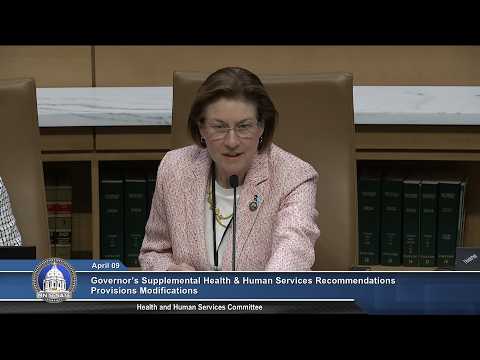
A Minnesota Senate committee heard testimony April 9 supporting a bill to remove prior-authorization and step-therapy requirements for FDA-approved medications to treat opioid use disorder, with clinicians and people in recovery saying administrative delays can cost lives.
Sponsor remarks to the Senate Health and Human Services Finance and Policy Committee framed the measure as a public-health step to reduce barriers for evidence-based medications that lower overdose risk and stabilize patients. The sponsor said the bill applies to medical assistance (Medicaid) and aims to prevent administrative paperwork from delaying treatment.
Dr. Kirk (testifying for the record) said prior authorization commonly blocks access to long-acting injectable formulations and other treatments that clinicians judge to be best for their patients. “The window when someone is ready for treatment can be short,” he said, arguing that delays increase relapse and overdose risk and leave providers unable to deliver timely care.
Jason Adventure, who identified himself as an executive committee member with Impact Minnesota and the Minnesota Coalition for the Homeless, gave a personal account of being forced to wait for insurance authorization after asking for treatment. “I was forced to wait twice and one of those times I didn't make it — I overdosed,” he said, urging lawmakers to eliminate prior authorization for medications he said saved his life.
Kimberly Price, an RN at a public-health clinic, described hundreds of hours spent completing prior-authorizations that she said divert clinicians from direct patient care. “Insurers often make decisions without knowing our patients' histories,” she said, adding that most prior-authorization requests are ultimately approved but after dangerous delays.
Committee members expressed support for improving access but raised questions about fiscal notes and whether the proposal's costs fall only on medical-assistance or ripple into commercial markets. The sponsor clarified the bill would apply to Medical Assistance. The committee adopted an author's amendment offered at the hearing and laid the bill over for later consideration.
Next steps: the committee will await updated fiscal estimates and may incorporate the measure into budget negotiations. No final votes were taken at the April 9 meeting.