Get Full Government Meeting Transcripts, Videos, & Alerts Forever!
Get email alerts on the Energy Infrastructure topic
No spam. Unsubscribe anytime.
Estes Park pursues battery storage funded by Office of Electricity grant to bolster grid resilience
Summary
Platte River Power Authority and Estes Park Power and Communications plan a battery energy storage system funded by a grant from the federal Office of Electricity to improve reliability, protect critical facilities and enable a future microgrid for the mountain town.
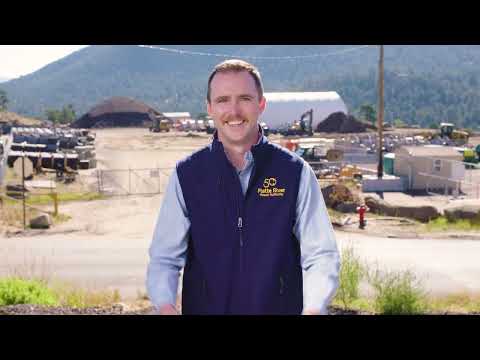
Platte River Power Authority and Estes Park Power and Communications announced plans to install a battery energy storage system in Estes Park after winning support from a grant program run by the federal Office of Electricity (OE). The presentation said the system would shore up local resilience, protect critical utility equipment and enable a future microgrid that could restore power faster to hospitals and other essential services.
The presenter (identified in the Media only as the presenter) said severe weather and recent disasters prompted the effort, noting that the town "has lost 100% power three times" in the past two years. "Being able to have that backup like that is going to be a game changer," the presenter said, describing patient-safety risks such as surgeries and imaging procedures that can be interrupted by outages.
The presentation said the initial goal for the battery was to help integrate more renewable energy, but that grant funding from OE broadened the project's purpose to include reliability and response to transmission outages. The Office of Electricity was described as the source of grant funding; listeners were directed to energy.gov/oe for more information.
Technical staff outlined that microgrids and battery systems are operationally complex. The presenter said they require advanced switching, IntelliRupters, SCADA integration, frequency response and ancillary-service capabilities tied to smart-grid and advanced metering infrastructure data. "Microgrids aren't easy. They're super complex," the presenter said.
Local business owner Mark, introduced in the presentation as a maker of taffy, emphasized the economic stakes for a tourism-dependent town: "I don’t care how the power comes to the taffy shop," he said, adding that Estes Park receives about 4.5 million visitors a year and depends on consistent services to support businesses.
The presenters framed the battery as a step toward a more resilient, flexible local grid that can isolate problem areas during outages and restore power to critical sites sooner. No formal votes or policy actions were recorded in the Media; the presentation closed with an invitation to learn more at the Office of Electricity website.
The presentation referenced past local disasters — a 2013 flood and major fires in 2020 — as background for the urgency of improving grid resilience. Officials did not provide a project timetable, capacity in megawatts or total grant amounts during the presentation; those details were described as part of project planning and therefore not specified in the Media.