Get Full Government Meeting Transcripts, Videos, & Alerts Forever!
Get email alerts on the Sewer District topic
No spam. Unsubscribe anytime.
Boone County commissioners advance $16.8 million 47 Commons package-plant as initial regional sewer district project
Summary
Commissioners voted to advance Resolution 20263, selecting a $16.8 million package plant at 47 Commons as the preferred initial project for a proposed Boone County Regional Sewer District; the plan would be financed by the district and private investment, not county general tax dollars.
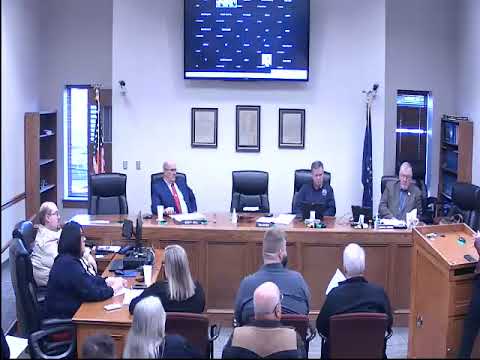
Boone County commissioners voted April 6 to move forward with a $16.8 million ‘‘47 Commons’’ package plant as the preferred initial infrastructure project in forming a Boone County Regional Sewer District.
The motion, adopted by voice vote, directs staff to include the 47 Commons package‑plant option in a petition for the district’s initial project. A county consultant who presented the options told commissioners the recommended option is smaller in cost and scale than two alternatives that would route flows to Thorntown, and that the project is structured so the sewer district — not the county general fund — would finance construction through a mix of private investment, future ratepayers and district bonding.
Why it matters: forming a sewer district and identifying a feasible initial project are prerequisites for seeking the permits and approvals needed to build sewer infrastructure. Commissioners were told the initial plan must be demonstrably feasible to secure approvals from the permitting authority referenced in the meeting (referred to in the transcript as "IDM"). The choice will shape what areas gain sewer capacity first and how future development is financed and served.
Details of the alternatives: the consultant presented three high‑level options. Two options that rely on regional connections to Thorntown carried estimated costs of about $41 million and just over $50 million, driven largely by distance, required land acquisition and additional lift stations. The lower‑cost alternative — described in the meeting documents as the 47 Commons centralized option — was estimated at approximately $16.8 million and would serve the 47 Commons economic development area with a package plant and associated collection system. The presenter said that option is expandable and could be modified later if demand or funding availability changes.
Financing and local impact: the presenter said repeatedly that county taxpayers would not be responsible for the bulk of construction costs, and explained the plan assumes a capital stack made up of private investment, future ratepayer revenue and bonds issued by the sewer district. Commissioners asked whether selecting the smaller option now would lock the county into that design; the consultant and staff said the district could change its infrastructure plan later, but the petition must show a viable initial project to proceed.
Commissioners’ concerns and vote: several commissioners said they want Thorntown to be involved in longer‑term planning and pushed for flexibility to change the plan if feasible options to connect to Thorntown emerge. One commissioner moved to adopt the 47 Commons ($16.8 million) option “with the ability to change in the future”; a second was recorded and the motion passed by voice vote with all present commissioners indicating assent.
Next steps: staff will include the selected footprint and plan in a formal petition and proceed with the permitting and feasibility process referenced in the meeting. The petition and the sewer district formation process will be subject to review by the permitting authority cited in the meeting transcript as "IDM" and may require additional engineering and financing work before construction begins.
"This is not a project that would be paid for by county taxpayer dollars," the presenter said, describing the intended capital stack. "We would put together a capital stack that makes developments that happen in there pay back into the fund to pay for the infrastructure."