Get Full Government Meeting Transcripts, Videos, & Alerts Forever!
Get email alerts on the Planning Regulations topic
No spam. Unsubscribe anytime.
Plan commission adopts updated subdivision rules after debate; removes proposed school‑impact checklist
Summary
After months of drafting, the commission adopted updated subdivision and land‑development regulations modernizing checklists, fire/public‑works coordination and online application workflow. Commissioners debated and then removed a proposed requirement that major subdivisions estimate school‑age children/fiscal impact before adoption.
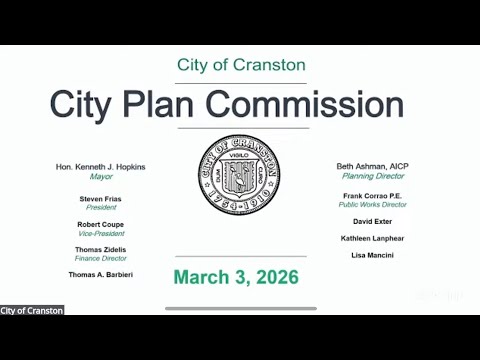
The Cranston City Plan Commission adopted a revised set of subdivision and land‑development regulations at its March 3 meeting after staff presented changes intended to modernize checklists, sync storm‑system language with the fire and public‑works departments, and support an online application workflow.
Changes shown to commissioners included updated checklist items, a revised applicant/owner consent form and specific language around storm‑water and fire‑system requirements that staff said will later feed into updates of the city's fire‑prevention code. Commissioners also debated a proposed requirement that major subdivisions file a fiscal‑impact statement estimating school‑age children and tax/service impacts. The chair noted that about two dozen Rhode Island municipalities include some form of school‑impact or fiscal‑impact checklist item; other commissioners raised concerns about methodology, potential misuse of unstandardized projections and legal exposure.
After discussion the commission adopted the revised regulations but voted to remove the proposed school‑impact checklist item from the major‑subdivision requirements. Staff said they will continue work on methodology and internal forecasting tools and suggested developing a consistent process for any future fiscal‑impact inputs.
Next steps: staff will publish the updated regulations and work with the fire and legal offices to align implementing language for the fire prevention code and online application process.